
Charter Oak sits where named channels and neighborhood streets meet the eastern San Gabriel Valley landscape. Walnut Creek passes through a small valley in the community's southeast, while San Dimas Wash is a concrete-lined flood-control channel nearby. Rainwater at a building may still come from a roof edge, a doorway, sloped ground, or a backed-up exterior drain. Charter Oak storm water cleanup begins by identifying that entry route and separating outdoor runoff from any simultaneous plumbing release.
Read the site before entering wet rooms
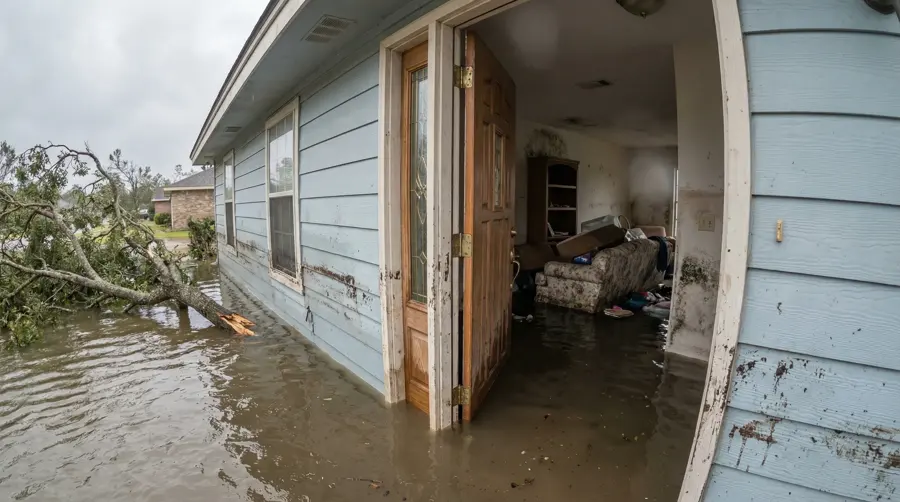
Storm cleanup starts outside the damaged room. The response team observes the direction of surface flow, low openings, door thresholds, roof discharge, and any visible drain backup. These details help explain how water reached the interior and whether it may return during continuing rain.
Arrow Highway and Bonnie Cove Avenue mark the historic center of the community, and the South Hills edge forms part of the northern border. Those local features do not determine the drainage of a particular lot. Each property needs a direct check of grading, openings, and the water marks left by the event.
Fast or deep water creates hazards that come before contents or flooring. Electrical exposure, unstable materials, sharp debris, and uncertain contamination can change safe access. Occupants should avoid wading into an affected area to retrieve belongings before those conditions have been assessed.
- Photograph exterior water marks from a safe position
- Note doors, vents, and other low openings
- Do not enter moving water
- Report electrical or structural concerns before extraction
Understand the nearby water features
Walnut Creek and San Dimas Wash are part of the local drainage system. The wash was formerly called the San Dimas River, which was a tributary of the San Gabriel River. That history explains the area's connection to a broader drainage system without establishing that either channel flooded a specific building.
Local ground has been described as dry riverbed with sandy soil. Soil can influence how rainfall infiltrates or moves across a site, but the response crew should not infer subsurface conditions from that description alone. Visible flow paths and building evidence remain the basis for the immediate scope.
Los Angeles County Public Works Flood Control District serves unincorporated communities, and the county study maps areas with a one percent annual chance of flooding. A map category cannot replace parcel-specific confirmation. Restoration notes should record observed water, not assign an unsupported designation.
Evaluate the water and isolate the area
Outdoor storm water can pick up soil, landscape chemicals, street residue, and waste before crossing a threshold. Its condition is different from a clean supply release even when both leave similar stains. The mitigation team evaluates exposure and selects protective measures before moving wet contents or opening assemblies.
Affected rooms should be separated from dry living space as the work allows. Foot traffic can carry residue onto clean flooring, and fans used too early can distribute contaminants. Initial control may include restricted access, protective floor paths, and removal of loose debris before active drying.
If sewage is suspected, the scope changes. Porous material decisions become more conservative, and cleaning must address contamination as well as moisture. A distinct plumbing backup should be documented separately from rain entry so the cleanup method matches each source.
- Restrict traffic between wet and dry rooms
- Bag loose debris instead of dragging it through the home
- Delay air movement until contamination is evaluated
- Separate storm entry notes from plumbing backup notes
Extract water without losing the evidence
Once entry is safe and the source is no longer adding water, extraction removes accessible liquid. Crews begin with the deepest or most mobile water, then work across wet surfaces in a controlled path. Early photographs preserve high-water marks and material conditions that may disappear during removal.
Carpet, pad, baseboard, wallboard, and built-in cabinets need separate decisions. Material that cannot be cleaned or dried reliably may require removal, while sound assemblies with useful access may remain. The choice depends on contamination, damage, and measurable drying potential.
The water damage cost calculator can help an owner organize affected areas before an inspection. Storm losses vary too much for a channel name or room count to establish the final work. Access, water quality, material layers, and the time wet all matter.
Follow moisture into concealed edges
Storm water often enters at the perimeter but does not stay there. It can travel beneath floating floors, soak a wall from the bottom, or collect behind a cabinet base. The visible edge therefore becomes the starting point for moisture mapping rather than the endpoint.
The drying team takes comparative readings at regular locations and marks the outer wet boundary. Corners, closets, transitions between flooring types, and shared walls receive extra attention. If readings rise on the other side of a partition, the work area expands to match the evidence.
Charter Oak contains owner-occupied and renter-occupied homes, with both represented in the 2020 Census. Access and notification may involve different people, but the technical goal remains the same: define every affected assembly and preserve a clear record of decisions.
- Check flooring transitions near the entry point
- Measure the back side of wet partitions when accessible
- Inspect cabinets at toe-kick level
- Mark each reading so later comparisons use the same spot
Dry the building in controlled zones
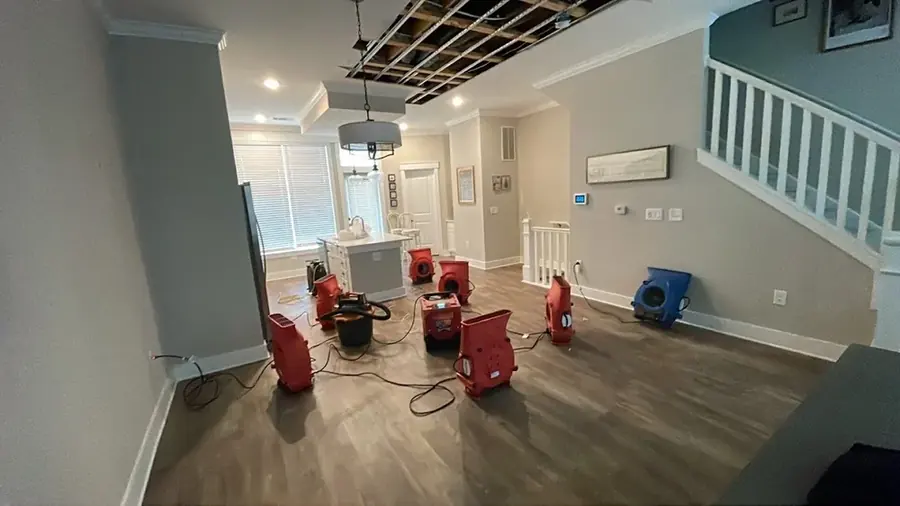
Drying follows cleaning and extraction. Air movement promotes evaporation at wet surfaces, while dehumidification removes vapor from the enclosed space. Equipment placement should serve the mapped materials and avoid blowing across untreated storm residue.
The team records temperature, humidity, and material readings during return visits. A slower section may need improved access, a tighter enclosure, or a different airflow path. Adjustments should respond to data rather than to a fixed schedule.
The Charter Oak water damage page lists the local service options for building owners and managers. Coverage in neighboring communities appears on the service area. The specific drying endpoint still comes from the materials in the affected building.
Reduce the chance of repeat entry
After cleanup, the observed route should be reported to the appropriate repair professional or property decision maker. A damaged door seal, blocked exterior drain, displaced roof component, or grading problem requires a different correction. Restoration work cannot substitute for stopping the route that admitted water.
Future rain deserves attention where marks show that runoff approached an opening. Owners can keep drains visible, watch discharge points during safe conditions, and avoid storing absorbent contents directly on a previously wet floor. Any alteration to drainage should follow the responsible agency's requirements.
Charter Oak is an unincorporated community, so records should describe it accurately rather than call it a city. A careful final file connects local setting, observed entry, cleanup, drying measurements, and repair items assigned to the appropriate professionals without turning regional geography into a claim about one parcel.
- Keep the moisture map with completion readings
- Retain photographs of the exterior entry path
- Move vulnerable storage above the prior wet level
- Arrange correction of the confirmed entry defect
Questions
Does proximity to a wash prove where storm water came from?
No. San Dimas Wash and Walnut Creek provide local context, but the entry route at a particular building must be observed directly.
Why is storm water evaluated before fans start?
Outdoor water may carry contaminants. Screening, isolation, and surface cleaning help prevent air movement from spreading residue.
Can wet wallboard always remain in place?
No. Contamination, physical damage, trapped layers, and drying access determine whether a material can be retained.
How is completion documented?
The team compares repeated material readings, records indoor conditions, and confirms that mapped areas have reached an appropriate stable condition.