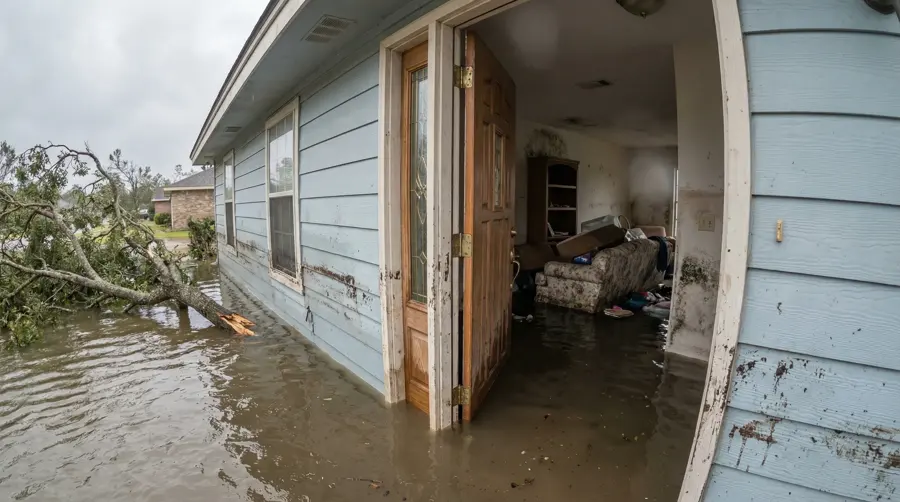
Storm water entering a building near San Dimas Wash needs a clear work boundary from the start. The response team identifies the exterior opening, separates outdoor water from clean rooms, photographs sediment and material contact, and limits additional entry where safe. Storm water cleanup in San Dimas follows the indoor path through floor seams, wall bases, and adjoining spaces. That map guides removal, cleaning, and the drying of retained materials.
Drainage context and property evidence
San Dimas has separate sanitary sewer and storm drain systems, and the storm drain system is intended to prevent flooding while draining toward the Upper San Gabriel River watershed. That municipal fact explains where public storm water belongs, but it does not diagnose a wet room. At the building, the useful evidence is much narrower: current weather, visible runoff direction, the first interior point of contact, and the materials that changed. A response near Cinnamon Creek, Arrow Highway, or Via Verde should record those observations without assigning a parcel flood status or recurring local pattern.
A property inspection should also distinguish water moving toward the building from water that has already entered it. Exterior marks can show the height and direction of runoff, while interior marks show which openings and assemblies were reached. Recording both sides of the boundary gives the cleanup team a coherent entry path instead of a collection of unrelated wet spots.
- Photograph the exterior opening from a safe location
- Keep public drainage facts separate from the building diagnosis
- Record current conditions instead of relying on past storms
- Name every indoor material contacted by runoff
Why outside water changes cleanup
A broken supply pipe may begin as clean water, while runoff crosses soil, pavement, plant material, and other outdoor surfaces before reaching a room. That contact changes containment, protective handling, porous material decisions, and the timing of air movement. Carpet, pad, wallboard, insulation, and composite trim cannot be treated as dry simply because pumping removed the visible layer. Durable concrete, framing, or tile may remain when they can be accessed, physically cleaned, inspected, and dried. The work boundary should protect people and unaffected rooms throughout that sequence.
Build the entry path before extraction
The first moisture map starts outside the puddle. It connects the threshold or wall opening with floor seams, baseboards, cabinet panels, contents, and any lower space. Photographs preserve water height and soil patterns before extraction changes them. Local restoration planning helps place this runoff response beside water extraction and structural drying, but the storm map remains its own record. If a door track holds concentrated debris while the middle of the floor shows only a film, those locations receive separate cleaning and moisture checks.
- Mark the first visible indoor contact
- Trace seams and wall edges beyond broad pooling
- List wet contents by original room
- Check the level below when gravity created a route

Remove water and sediment in stages
Bulk recovery lowers water depth so crews can reach the remaining debris. Coarse material is contained, followed by detail extraction and removal of fine sediment from corners, cracks, tracks, and textured finishes. Starting fans too early can distribute soil through occupied rooms and make the clean boundary harder to defend. When liquid remains accessible beneath a lifted edge or at a floor low point, another extraction pass comes before evaporation equipment. The project record distinguishes water recovery, debris handling, surface cleaning, and structural drying instead of combining them into one vague cleanup step.
Sediment can collect beneath moved contents, at floor edges, and inside small depressions after the visible water is gone. The crew works in manageable sections so extracted areas do not become recontaminated by foot traffic. Photographs taken after gross removal and again after detailed cleaning show the difference between water removal, soil removal, and the later drying phase.
Learn from the confirmed storm event
A February 2025 Southern California storm prompted evacuation orders for five homes in San Dimas. During an active storm, occupants should follow official evacuation directions and stay away from moving water. When safe access resumes, the cleanup team records the entry route, indoor water level, sediment, and contacted materials. Photographs taken before removal preserve the starting condition. A room diagram then connects each damaged area with the extraction, cleaning, and drying work required before repairs can cover it.
- Use the confirmed date only as community context
- Do not extend one event to every local property
- Leave parcel hazard status to official mapping
- Document present source controls and limitations
Clean durable surfaces before drying
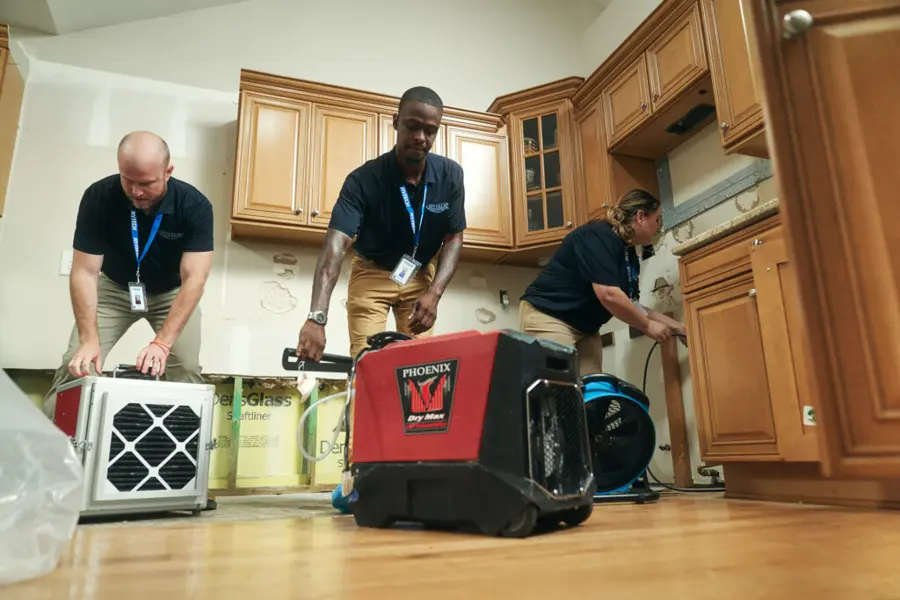
Once sediment and affected porous materials are out, retained surfaces receive detailed physical cleaning. Floor to wall joints, fasteners, cabinet voids, and threshold channels deserve extra attention because residue collects at edges. Cleaning acceptance and moisture completion answer separate questions: a surface may be clean while still wet, or dry while residue remains. Dehumidifiers and air movers begin only when the controlled zone is ready. The drying team then creates fixed material points and tracks each assembly until it reaches a documented goal.
Close the storm file with clear limits
The final file should show the observed opening, indoor path, recovered water, contained debris, discarded materials, cleaned surfaces, equipment changes, and last readings. Temporary protection at a door or wall remains a separate repair item and should not be described as permanent drainage correction. A water damage cost calculator can organize early scope questions, while actual cost follows the measured materials and work performed. Any inaccessible area, continuing exterior concern, or repair opening stays visible in the handoff.
Closeout notes name the openings inspected and any exterior condition referred for repair. They distinguish crew observations from the timeline supplied by occupants. Storm conditions can change quickly as surfaces drain and dry, so each photograph and note carries a location and time. Inaccessible areas are identified for the next inspection.
- Match photographs to consistent room labels
- Keep cleaning and drying results separate
- State temporary source measures plainly
- List every inaccessible or unfinished condition
Questions
Does the wash prove a nearby home will flood?
No. The channel provides local drainage context. Property elevation, official mapping, current runoff, building openings, and observed material contact must be evaluated separately.
Why is soil removal completed before airflow?
Moving air across loose sediment can spread particles and blur the controlled boundary. Water and debris are recovered, retained surfaces are cleaned, and then structural drying begins.
Can wet carpet remain after storm water?
Outdoor contact changes the decision. Carpet and pad are porous, so contamination, sediment, physical condition, and cleanability must be evaluated before any material stays.
What records help after cleanup?
Useful records include the entry path, initial photographs, contents, water and debris removal, material decisions, cleaning details, moisture readings, equipment changes, and unresolved exterior repair.