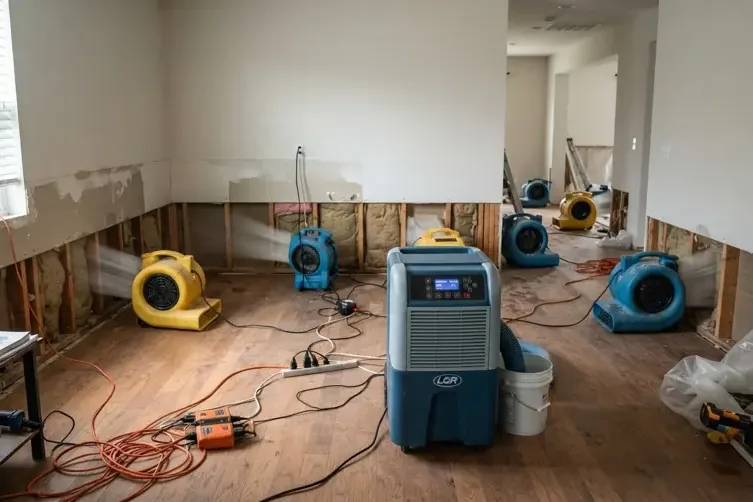
Groundwater can appear at a floor edge, return after wiping, darken a wall base, or keep a lower room humid after visible water is removed. During the April 2023 Stone Canyon event, residents used portable pumps as groundwater affected homes. Structural drying in Claremont starts by tracing active seepage and measuring the materials it has reached. Repeat checks show whether pumping and drying are keeping up with incoming water.
What the local event confirms
Groundwater flooding affected more than two dozen homes in Stone Canyon during April 2023, and residents used portable pumps. At a building near Indian Hill, the Claremont Colleges, or The Webb Schools, the first inspection follows the water from its visible entry points. The team records how quickly it returns, which floor and wall layers remain wet, and whether pumping changes the level. Those observations determine where recovery equipment and further inspection are needed.
Portable pumping was part of the response to the April 2023 groundwater flooding. For a newly affected home, a simple timeline makes the work easier to follow: when moisture appeared, when pumping began, and which locations became wet again. The team photographs the same floor edges and checks marked points over time. A rising level or renewed seepage directs attention back to the entry route before additional finish work begins.
- Record the confirmed event without predicting repetition
- Do not assign the Stone Canyon cause elsewhere
- Photograph where water first appears indoors
- Note whether water returns after recovery
Distinguish seepage from retained moisture
Active seepage and structural moisture can exist at the same time. Liquid may reappear at a joint while wallboard, wood, concrete, or cabinet material continues drying from an earlier period of contact. The team labels active collection points separately from material meter locations. If a floor edge rises after pumping, that observation belongs in the source record. If a wall base steadily declines, it belongs in the drying trend. Combining both into one room average would hide the difference between continuing entry and normal evaporation.
Map the lower room by assembly
A useful map names floor field, perimeter, wall bases, cabinets, trim, contents, and connected rooms. Concrete and finish flooring can behave differently, while a partition may wick above the visible edge. Claremont water damage restoration provides the broader service context, but this dry out should remain tied to specific material points. Thermal imaging may help select inspection areas; direct readings confirm the condition and give later visits an exact place for comparison.
Lower wall corners, floor joints, closet edges, and penetrations can each tell a different part of the story. A grid of marked points helps show whether dampness is concentrated at one edge or distributed across the room. If a finish covers the structural surface, the crew notes that limitation and chooses access only when the expected information will affect drying or material decisions.
- Create separate labels for field and perimeter
- Measure walls where they meet the floor
- Check cabinets and contents at contact points
- Include adjoining or lower spaces with a plausible path
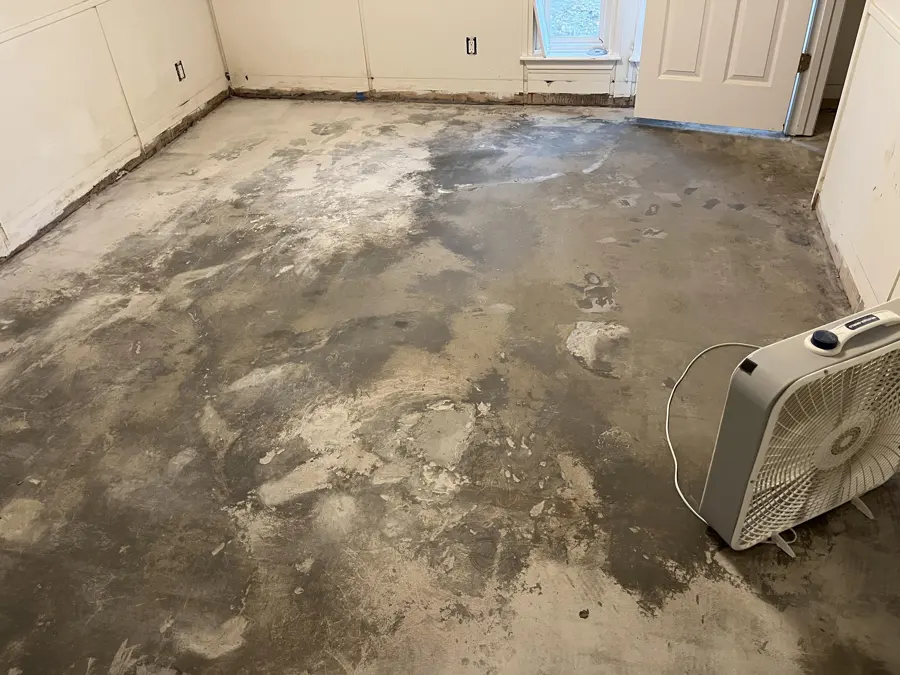
Use extraction without declaring the source solved
Portable pumps and extraction tools reduce accessible water and limit its spread. The team then watches the cleared area for renewed seepage and records any active openings. Source investigation, drainage correction, and building repair receive separate scopes. The mitigation log identifies when water was recovered, where it returned, and how the changing wet boundary affected equipment placement. Once incoming water is controlled, repeat material readings show whether the remaining floor, framing, and wall layers are drying.
Create controlled evaporation paths
After accessible liquid is removed, air movement must reach the wet surface. A sealed finish, saturated insulation, closed cabinet void, or covered wall base may prevent useful evaporation. Controlled access can expose the material while limiting unnecessary removal. Dehumidification then collects vapor released into the work area. The equipment plan follows the amount and type of retained material, not a fixed calendar. Measured drying work ends from stable readings rather than visual appearance alone.
- Remove accessible liquid before evaporation
- Open only where evidence supports access
- Balance air movement with vapor removal
- Adjust equipment when a material trend stalls
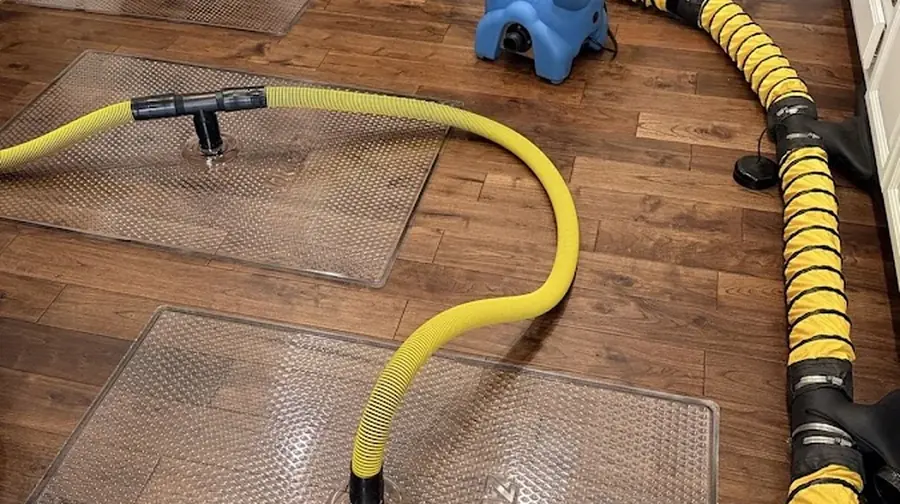
Read daily trends with the source status
A falling material sequence can show drying progress even when the room remains under source observation. A flat or rising sequence prompts questions about renewed seepage, blocked access, instrument contact, or the selected comparison. Room humidity helps describe the chamber but cannot replace direct material readings. When the source condition changes, that change is recorded beside the data so later readers do not interpret a new water episode as failed equipment or treat a temporary dry period as permanent correction.
Source observation and material drying belong on the same timeline. Pump operation, visible seepage, rainfall, and any change made by a drainage professional can be noted beside moisture readings. This prevents an apparent setback from being blamed automatically on equipment. It also helps show when a material improved during a stable period and became wet again after new entry.
Prepare a defensible handoff
The closeout should identify active seepage observations, pumping, material openings, drying equipment, fixed readings, dry comparisons, inaccessible areas, and repair work outside mitigation. It should not certify groundwater correction or extend the 2023 event to another property. The service area overview can help locate nearby support, while the building record remains specific. Before finishes return, floor edges and wall bases receive a last comparison because those transition points often lag behind the open room.
A handoff should state what remains uncertain. Groundwater behavior may need evaluation beyond the restoration scope, and a dry interior interval does not by itself prove permanent correction. Owners can use the moisture record, photographs, and source observations when consulting the appropriate building, drainage, or engineering professional. The drying team closes only the work it can verify in the affected materials.
- State whether active water was observed at closure
- Separate source work from material drying
- Photograph exposed surfaces before cover
- List every limitation for the repair team
Questions
Does the Stone Canyon event prove another home has groundwater flooding?
No. It confirms a local event in April 2023. Another property requires its own source observations, material map, and investigation.
Why can water return after pumping?
An active entry path may continue feeding a low point. Pumping removes accessible liquid but does not automatically correct the source outside or below the room.
Can concrete look dry while still releasing moisture?
Yes. Surface appearance can change before the material reaches a suitable comparison. Fixed readings and room conditions show the actual trend.
When can finishes be replaced?
Replacement follows stable retained material results, clear source status, documented openings, and disclosure of any area that could not be inspected.