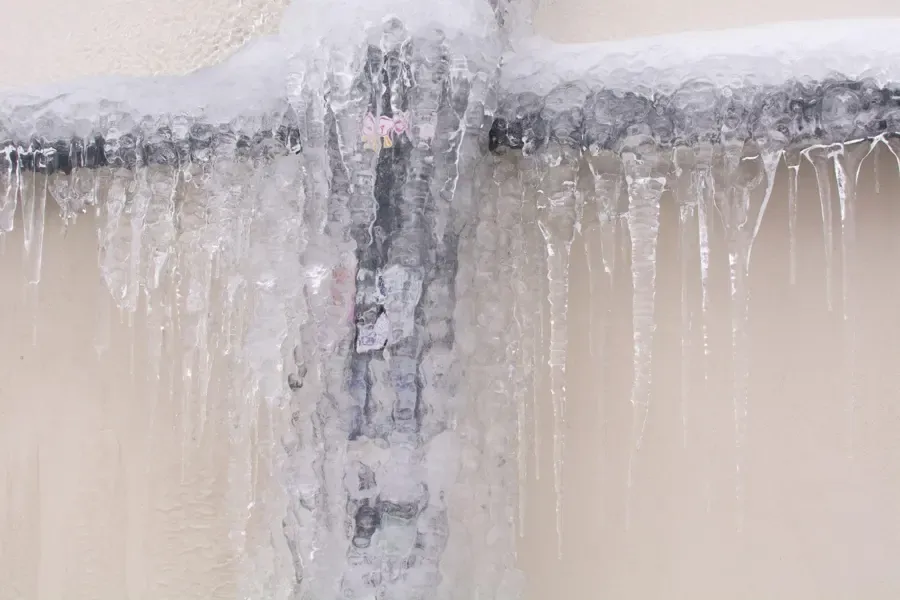
When an exposed spigot or indoor supply pipe splits after cold exposure, safe shutoff comes before cleanup. A property near Harbor Boulevard, the Santa Ana River area, or the Platinum Triangle needs checks along the actual water path, including spaces below the break. Other local cleanup services address releases from appliances, drains, and outdoor water.
Isolate the pipe before thawing changes the condition
Ice can temporarily block a damaged section. Water may begin flowing after temperature rises, so the supply should be controlled and a plumber should direct repair. Open flames and improvised high heat are not part of restoration. The initial record notes ice, cracking, staining, and the first place water appeared.
- A safe building or fixture shutoff is identified before active leakage resumes.
- Wet electrical equipment and outlets remain outside the occupied work area.
- Plumbing staff determine how to thaw, test, and repair the damaged component.
- Photographs distinguish exterior ice from interior water damage.
- No page-wide statement treats a rare observation as the normal local winter condition.
Trace the release through protected and concealed areas
Cold exposure often occurs near an outside wall, hose connection, garage, cabinet, or unconditioned space, but the inspection follows the actual building. Water can descend inside a partition or move beneath flooring after the split opens. Around Disneyland Resort, the Platinum Triangle, or Orange Freeway corridor, property use changes access planning rather than the moisture principles.
- Both sides of the source wall receive readings where access permits.
- Cabinet floors and toe spaces are checked when pipes run behind fixtures.
- Lower-level ceilings are examined after an upper-wall release.
- Insulation is assessed for retained water and blocked airflow.
- Floor seams and thresholds reveal whether water moved into another room.
Remove water and condition only the proven wet zone
Extraction reduces liquid before air movement adds evaporation. Failed wallboard or saturated insulation may need controlled removal, while sound materials can remain when category, access, and measurement trends support drying. Equipment is placed around the mapped assemblies rather than around the weather story.
- Air movers target safe exposed surfaces instead of closed wet insulation.
- Dehumidifiers manage vapor released from wood, wallboard, concrete, and finishes.
- Daily readings use labeled points for meaningful comparison.
- Equipment changes when one edge or cavity stops improving.
- Another source check occurs if wetness increases after repair.
Prepare before the wall is closed again
The final file explains what was observed, how the pipe was controlled, which materials received water, and how completion was established. Burst pipe cleanup may be relevant when the cold condition is uncertain but a sudden break is confirmed. Finish repair follows separate dry-condition evidence.
- Source notes identify the pipe connection, visible damage, shutoff time, and completed plumbing repair. Photographs keep those findings connected to the indoor water path.
- Removed materials are listed by room and assembly.
- Final readings are compared with suitable dry references.
- Photographs show accessible framing before insulation or wallboard replacement.
- Prevention questions are referred to the appropriate plumbing or building professional.
A careful response neither minimizes a cold-damaged pipe nor exaggerates local freeze risk. It treats the event as a property-specific plumbing release. This approach keeps source repair, water extraction, cavity access, structural drying, and finish replacement in a clear sequence supported by what was actually found.
The source route is observed again after normal temperature returns. That check helps distinguish residual moisture from a renewed release.