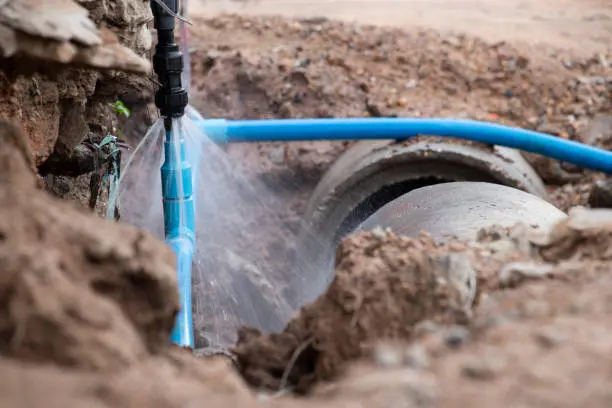
A supply pipe break near Bonnie Cove Avenue can wet the opposite side of a wall before water reaches the hallway. Along Arrow Highway, an occupied property may need protected equipment routes, while a room near the South Hills edge can send water to a lower level. The building path matters more than the neighborhood label. Charter Oak water restoration links pipe cleanup with other source responses.
Stop pressure and preserve the starting scene
An accessible shutoff is used only when it can be reached safely, and a plumber handles pipe repair. Before extraction changes the room, photographs capture the break area, water edges, cabinet contents, ceilings, flooring, and openings into adjoining spaces.
- Electrical and overhead hazards remain outside the first work boundary.
- Source repair timing is written into the mitigation record.
- Contents are grouped by the room where they were found.
- Water category is based on source and contact history.
- The level below is included whenever gravity created a route.
Follow pressure driven and gravity movement
A pressurized release can spray into insulation or across a cavity, then gravity carries water along framing and penetrations. Readings start at the source and extend through partition backs, wall bases, floor transitions, ceilings below, and nearby cabinets. The visible break is not treated as the complete loss.
No citywide pipe material is claimed. Source notes describe the pipe type and connections observed by the plumber, alongside the moisture path documented by the drying crew at the property.
Recover water before enlarging the openings
Accessible liquid is extracted from floors, carpet systems, cabinets, and cavities. Small access points can confirm wet insulation or trapped water before a larger removal. Sound dry material remains outside the boundary unless new evidence shows contact.
- Insulation is assessed where it can hold water against framing.
- Cabinet backs and toe kicks receive separate meter points.
- Floor seams are checked beyond the first puddle.
- Airflow starts only after unsafe debris and contamination are handled.
- Ceiling leak response protects rooms below overhead spread.
Test the route after the repair
Drying equipment is adjusted from material trends. Once plumbing service restores pressure, accessible source areas and connected assemblies are checked again so a renewed release is not confused with residual drying. Stable results support equipment removal.
- Daily readings use fixed material locations.
- Photographs show controlled openings and retained framing.
- Equipment changes are tied to the slowest wet layer.
- Inaccessible cavities remain noted in the closeout.
- Pipe repair, mitigation, and reconstruction stay separate.
The final file tells a clear sequence: pressure stopped, liquid recovered, hidden materials measured, access created where needed, and retained assemblies brought to their goals. That evidence is more useful than a generic statement that the room looked dry after the pipe was fixed.
Pressurized water can create disconnected pockets when insulation, blocking, or cabinet construction redirects the spray. A continuous visual stain is not required for materials between the source and a lower room to be affected. The inspection tests likely turns in the route, then stops when repeated dry results establish a supported boundary.
After equipment is reduced, the source wall and lowest connected point are measured once more. That final comparison shows whether the repaired system remains stable and whether moisture continues leaving the slowest cavity. Any difference is investigated before finishes conceal the route.
A final cavity check confirms that the lowest mapped point remains stable after equipment reduction and restored plumbing service.