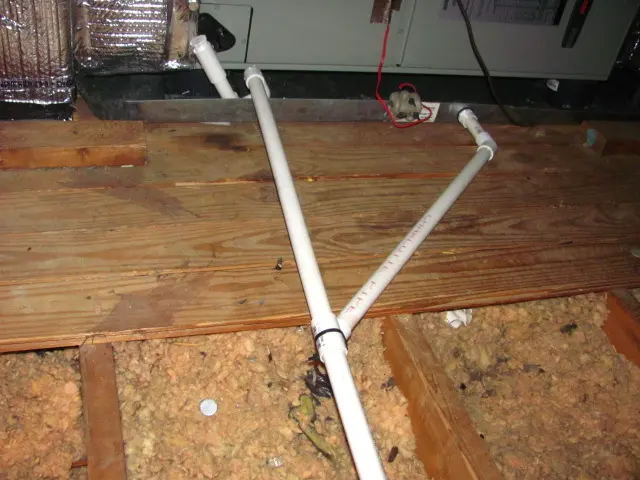
Condensate water can begin as a slow overflow near cooling equipment and appear later as a ceiling ring, damp closet, or wet wall edge. In northwest Claremont, around The Webb Schools, near Pomona College, or by the Claremont Colleges, equipment location determines whether the first inspection starts in an attic, closet, roof area, or occupied room. The local restoration hub covers related water sources.
Separating equipment service from water mitigation
An HVAC professional addresses the blocked drain, failed pan, disconnected fitting, or equipment issue. The drying team follows released condensate through insulation, wallboard, framing, and floor finishes. After the drain is cleared, repeat measurements track the materials below it until each affected layer meets its drying target.
- The equipment area is photographed before accumulated water is removed.
- Nearby insulation and framing receive readings even when the occupied ceiling shows only a small mark.
- Inspect the drain route and photograph wet connections before the HVAC repair changes access.
- The room below is checked around fixtures, walls, and floor surfaces.
- Source-service notes are kept separate from the mitigation moisture record.
Opening only where condensate is trapped
A ceiling cavity may hold damp insulation long after a pan is emptied. Access decisions consider board strength, water category, insulation condition, and the ability to move air through the cavity. A small opening can confirm conditions before a wider removal is planned.
- Sagging board is treated as an overhead hazard and the area below remains restricted.
- Wet insulation is evaluated where it touches framing or blocks useful airflow.
- Closet baseboards and flooring are checked for water that moved down a wall.
- Cabinet or soffit areas receive readings when the drain route passes above them.
- Containment controls fibers and dust during any ceiling or wall opening.
Managing humidity around a cooling-related loss
Cooling equipment changes temperature and humidity near the source, so the drying team relies on material readings rather than room feel. Air movers target safely exposed surfaces, and dehumidifiers collect moisture released from wood, wallboard, and concrete. Trends are reviewed separately in the equipment area and the room below.
- Cold surfaces are rechecked so temperature effects are not mistaken for retained moisture.
- Equipment placement avoids interfering with HVAC service access.
- Airflow does not begin through loose insulation or contaminated debris.
- An inside corner or wall base can remain wet after the ceiling area improves.
- Structural drying in Claremont tracks those different material responses.
Closing the loss with a maintenance and drying record
The finished file states when the condensate source was controlled, what materials were affected, and how drying was verified. It can help a property owner discuss maintenance with the HVAC provider without inventing a local equipment rule or predicting another failure.
- Initial photographs show the pan, closet, attic, or ceiling condition that was accessible.
- Daily logs identify fixed material locations rather than recording humidity alone.
- Removed insulation or wallboard is listed by work area.
- Final readings are taken before ceiling texture, paint, or trim replacement.
- The report distinguishes equipment service from water mitigation and finish repair.
The equipment area is revisited after the occupied ceiling begins to improve. Condensate may remain at a pan, platform, or insulation pocket even when the stain below stops growing, so both ends of the path keep separate readings.
After HVAC service resumes, both the equipment area and room below are measured again under normal operating conditions to confirm that no renewed condensate is entering the mapped assembly.