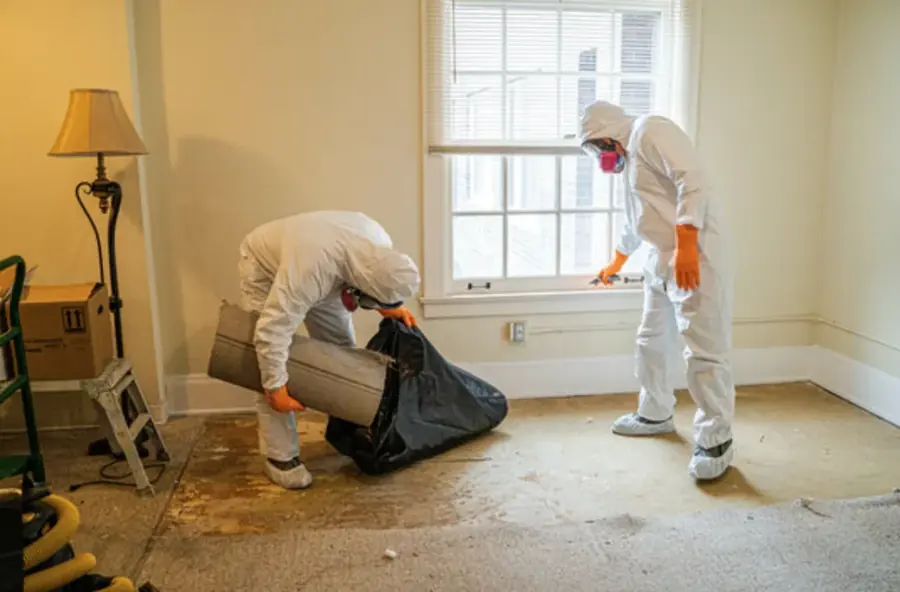
The City of Claremont provides sewer services. At a sewage-affected property, cleanup starts by locating the wastewater, mapping contacted rooms, and checking whether flow has stopped. Around Claremont Depot, Indian Hill, Pomona College, and Stone Canyon, the team isolates the affected zone before moving equipment through the building. Protective coverings separate the removal route from clean flooring, and contaminated tools stay inside the planned work boundary. Claremont restoration services also cover other water categories.
Keeping occupants and clean rooms outside the work zone
Sewage water can carry pathogens and debris, so people and pets remain out of the affected area. The crew establishes entry and exit control, protects clean travel paths, and identifies electrical or structural hazards before extraction. Photographs document water levels and contacted materials without unnecessary movement through the contamination.
- Doors and openings toward unaffected rooms are controlled before hoses and tools enter.
- Protective equipment matches the exposure and tasks performed inside the zone.
- Wet contents are listed and kept separate from dry belongings.
- Foot traffic does not cross from the work area into kitchens, sleeping rooms, or clean corridors.
- The source is evaluated by the appropriate plumbing or sewer professional.
Removing wastewater and affected porous material
Liquid recovery is only one part of Category 3 cleanup. Carpet, pad, absorbent trim, wallboard, insulation, and composite materials that contacted sewage are evaluated for removal because simple drying does not make contaminated porous material clean. Openings extend to a controlled, supported boundary.
- Extraction tools used in the zone remain within the decontamination plan.
- Debris is bagged or contained before it moves through the building.
- Wall cavities are opened where wastewater entered or porous material blocks cleaning.
- Durable flooring is inspected at seams and edges where residue can remain.
- The crew records each removed material by room for the claim and repair scope.
Cleaning retained surfaces before air movement
Concrete, framing, and other durable materials that remain are physically cleaned to remove residue and organic debris. Air movers do not start across an unclean contaminated surface. Once the work area is suitable, controlled evaporation and dehumidification address the water held by the retained structure.
- Edges, fastener points, joints, and cracks receive detailed attention during cleaning.
- Waste and visible soil are removed before a treatment step is considered.
- Drying equipment is placed after the zone is cleared for controlled airflow.
- Material readings track framing, concrete, and retained wall sections separately.
- Structural drying verifies the cleaned assembly after removal is complete.
Closing the zone with a defensible record
The final file shows the original contamination area, materials removed, cleaning performed, and readings supporting dry conditions. It avoids unsupported claims about local backup patterns or private lateral responsibility. Repair work begins only after the retained structure is clean, dry, and ready to be covered.
- Before-and-after photographs use consistent room labels.
- Removal lists distinguish porous debris from durable materials cleaned in place.
- Daily logs record conditions after the contamination source is removed.
- Final readings precede new wallboard, flooring, insulation, or trim.
- The closeout states any inaccessible area or separate plumbing work still needed.
Clear-light inspection follows cleaning at seams, corners, and fastener areas where residue can remain. Cleaning verification and moisture verification stay separate because a surface can be clean but wet, or dry but not acceptably cleaned.
After equipment removal, the controlled zone is checked once more for residual debris, damp edges, and unrecorded openings. This check confirms that cleaning and drying records match the physical area being released for repair by the property team.