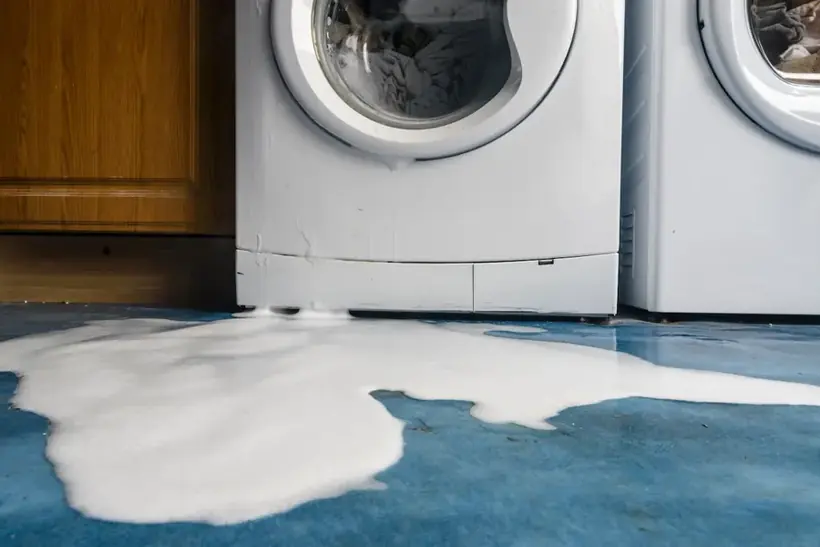
Laundry and kitchen water migration

Appliance Leak Water Damage in Claremont, CA

A washer hose, dishwasher connection, or refrigerator supply can release water beneath cabinets and flooring before it reaches an open part of the room.

(888) 578-6508Inspect beneath the appliance
IICRC S500 drying standardTruck-mounted extraction24/7 dispatch
Water spreading from washing machines across a laundry floor
Hidden water checked beyond the appliance
Common areaslaundry and kitchen
Concealed routecabinets and floor layers
Occupancy contextowner and renter homes
Completionsubfloor and wall readings
Right now

First steps for appliance leak water damage in Claremont

  1. 1

    Stop and document the appliance

    Control the supply or drain, address electrical safety, and photograph the machine, floor, cabinets, and nearby contents before movement.

  2. 2

    Prepare for concealed release

    Place extraction and floor protection before pulling the appliance because trapped water may escape when the unit shifts.

  3. 3

    Map cabinets and floor layers

    Measure toe kicks, sink bases, wallboard, transitions, underlayment, and any room below to establish the complete wet boundary.

  4. 4

    Dry before reinstallation

    Condition retained materials and record stable readings before cabinets close, trim returns, or the appliance is placed back.

How the work is done

The standard behind appliance leak water damage

  • Moving an appliance can release concealed water
  • Cabinet and floor layers are measured separately
  • Water category depends on source and exposure
  • Reinstallation follows documented drying of retained materials
Get the drying started today
Typical cost ranges

What does appliance leak water damage cost in Claremont, CA?

Appliance leak cleanup cost reflects water category, machine access, cabinet and toe-kick work, floor-layer migration, affected contents, rooms below, material removal, drying zones, and documentation. Appliance movement can change the boundary.

Contained area

$1,100 to $3,000
  • One appliance bay
  • Focused extraction
  • Minor toe-kick access

Several rooms

$3,000 to $6,500
  • Water crossed transitions
  • Cabinet and floor work
  • Several drying zones

Complex loss

$6,500 to $12,000+
  • Broad concealed migration
  • Extensive cabinet access
  • Longer material monitoring

Typical ranges, not a quote. Room details can be entered in the water damage cost calculator.

Slip by slip

How appliance leak water damage is handled in Claremont

  1. Slip 01

    Walkthrough and moisture map

    The tech who does the walkthrough finds the source and maps wet materials with thermal imaging and pinless meters before any appliance leak water damage equipment goes down.

  2. Slip 02

    Extraction

    The extraction crew pulls standing water with truck-mounted extraction, so it leaves the building instead of wicking into the next room.

  3. Slip 03

    Structural drying

    Air movers set to each room's evaporation load and LGR dehumidifiers pull moisture out of framing, drywall and the slab surface.

  4. Slip 04

    Verify and document

    Readings are logged daily. Equipment comes out when wet materials sit within 2 to 4 points of a dry reference, and the logs go in the claim file.

An appliance leak may be noticed at the machine, yet the largest wet area can sit beneath a cabinet run or finished floor. The local mix of owner and renter occupied housing makes careful room and unit documentation relevant. Near the Claremont Colleges, Claremont Depot, Indian Hill, and Pomona College, the crew follows the actual building layout rather than assuming every kitchen or laundry is arranged the same. Local water damage help covers other sources.

Preserving the source area before moving the appliance

The supply or drain is controlled and the appliance is serviced by the appropriate trade. Before the machine is pulled out, the team photographs the visible water, nearby contents, and finish condition. Moving a washer, dishwasher, or refrigerator can release a second pocket of water, so floor protection and extraction tools are prepared first.

  • Power remains off around wet cords, outlets, and appliance components until they are safe.
  • Hoses and fittings are described only when their failure is actually confirmed.
  • Cabinet interiors and toe kicks receive readings before trim is removed.
  • The wall behind the appliance is checked above the visible floor edge.
  • In a rental, the affected room and unit are labeled consistently for the record.

Finding water beneath cabinets and finish flooring

Water can pass through seams, fastener openings, and gaps around utilities. A floor may feel dry in front of the appliance while underlayment remains wet farther under a cabinet. The technician maps transitions and compares readings with an unaffected section of the same material.

  • Dishwasher water is checked beneath the adjacent sink base and cabinet ends.
  • Laundry releases are traced toward wall bases, doorways, and any room below.
  • Refrigerator supply water is measured behind the unit and along the nearest cabinet run.
  • Floating floor edges are inspected for trapped water and dimensional change.
  • A small toe-kick opening can provide access without dismantling an entire cabinet bank.

Deciding what can dry in place

A recent clean-water release differs from dishwasher discharge that has carried food residue or water that remained concealed. Water category, exposure, material condition, and access shape the decision. Durable cabinet boxes may be dried with targeted openings, while swollen composite panels or contaminated absorbent items may not be salvageable.

  • Carpet pad and floor underlayment are considered separately from the visible finish.
  • Cabinet backs are inspected where they contact wallboard or trap moisture.
  • Removal boundaries stop where instruments show comparable dry material.
  • Air movement begins only after debris and contamination concerns are controlled.
  • Contents are kept separate from structural drying decisions and listed by location.

Verifying the kitchen or laundry before reinstallation

The appliance can be ready for service before the room is ready for finish work. Air movers and dehumidifiers condition exposed materials, and daily readings track floor layers, wall bases, and cabinets independently. Structural drying in Claremont continues until the retained assembly meets its comparison target.

  • Equipment placement keeps service access available for the appliance trade.
  • Floor readings are repeated at seams and transitions, not just the original puddle.
  • Cabinet moisture is tracked at the same panels each day.
  • Photographs show openings before toe kicks, trim, or appliances return.
  • The closeout distinguishes appliance repair, mitigation, and finish replacement.

After the machine moves, the newly exposed floor is compared with earlier readings at the cabinet and doorway. This can reveal a narrow hidden channel and expands the work boundary only when the evidence supports it.

That comparison also supports careful cabinet reinstallation decisions.

Coverage

Appliance Leak Water Damage across Claremont

Water damage restoration in Claremont covers ZIPs 91711. Local areas include Stone Canyon, Indian Hill, Claremont Depot, Claremont Colleges, The Webb Schools.

See every area and ZIP covered
Answers

Appliance Leak Water Damage questions in Claremont

Should the appliance be pulled out right away?

Source and electrical safety come first. Extraction and floor protection should be ready because moving the unit can release trapped water from beneath it into a wider part of the room. Before-and-after appliance photographs help separate existing finish wear from swelling or separation caused by the current release.

How is water found beneath cabinets?

The technician measures toe kicks, cabinet panels, nearby wallboard, and flooring, then creates a small access point when readings indicate a concealed pocket that cannot be inspected or dried from the room. The source report should identify whether supply or discharge water was confirmed, because that distinction affects cleaning and salvage decisions for underlayment, cabinets, and other absorbent materials.

Can a dishwasher leak be treated as clean water?

Not automatically. Water that contacted food residue, a drain path, or concealed debris may require different cleaning and material decisions than a recent supply release. The source and exposure are evaluated.

Does laminate or floating flooring need removal?

That depends on swelling, contamination, trapped underlayment, access, and whether readings improve. Water can travel beneath connected boards, so the boundary is mapped beyond the visible edge before a decision.

What changes in a rental property?

The rooms and units affected should be labeled separately, with photographs and readings tied to each location. Access and contents coordination may involve occupants and management, while the drying decision remains material based.

When can the appliance go back?

Reinstallation follows source service and verified drying of nearby floors, walls, and cabinets. Returning the unit too early can hide retained moisture and block access to an unfinished drying zone.

Emergency water removal

Appliance Leak Water Damage in Claremont? Start the dry-out now.

A safe shutoff stops new water. The drying team maps affected materials and begins extraction while occupants stay clear of wet outlets.

Call (888) 578-650824/7