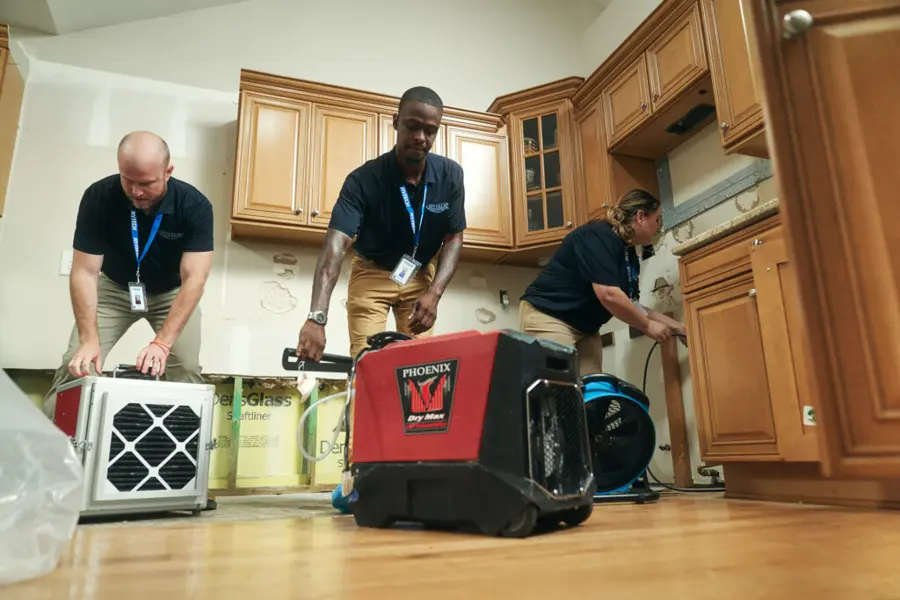
A storm entry near San Antonio Creek is handled differently from a broken clean-water supply. Runoff can pick up soil and other contaminants before reaching a doorway, garage, wall joint, or low opening. Around Stone Canyon, Indian Hill, Claremont Depot, and the Claremont Colleges, the cleanup begins by stopping exposure and separating the affected zone. Claremont water damage restoration provides the broader service context.
Establishing a safe boundary before pumping
Removing the visible water is necessary, but the work area must first be organized so contaminated debris and foot traffic do not spread into dry rooms. The crew identifies the entry point, observes the direction of flow, and marks every porous finish contacted by the water. Electrical and structural hazards are addressed before extraction equipment enters.
- People and pets remain outside rooms containing outdoor flood water.
- Dry pathways are protected for equipment movement and debris removal.
- Water level marks and affected contents are photographed before pumping changes the scene.
- Openings toward unaffected rooms are controlled to limit cross traffic.
- The source is monitored because runoff may continue while rain or drainage conditions persist.
Removing silt, water, and materials that cannot be cleaned
Pumps and extractors recover water, but sediment must also be physically removed from corners, floor edges, and cavities. Porous items exposed to Category 3 water are evaluated for disposal rather than simple surface drying. Durable materials can proceed to detailed cleaning when their condition and access allow.
- Carpet, pad, and absorbent trim are separated from hard surfaces during material decisions.
- Wallboard openings extend only as needed to remove contaminated material and reach the cavity.
- Mud is collected before it dries into seams or becomes airborne dust.
- Tools and hoses leave through the controlled route instead of crossing clean rooms.
- Debris containers remain within the work plan until they can be removed safely.
Cleaning the retained structure before drying
A contaminated assembly is not ready for air movement simply because standing water is gone. Remaining framing, concrete, and other durable surfaces are cleaned according to their condition, then the area is prepared for dehumidification. This order prevents air movers from distributing contamination before source removal and cleaning are complete.
- Detailed cleaning reaches joints, fastener areas, edges, and other places where silt collects.
- The crew checks for remaining organic debris before the drying phase begins.
- Airflow starts only after the work zone is suitable for controlled evaporation.
- Dehumidification is sized to the exposed wet materials and room conditions.
- Sewage and black-water cleanup explains the related Category 3 material rules.
Documenting a weather event without overstating local risk
Most local rain falls in winter, and the foothill setting makes runoff a relevant inspection question. The April 2023 Stone Canyon event involved groundwater rather than proof of recurring flash floods throughout the city. The record for a storm loss should therefore describe the actual entry and materials at that building.
- Photographs identify the entry point and the extent of sediment.
- Notes distinguish outdoor runoff from any separate plumbing release.
- Removed materials are listed by room and type.
- Cleaning and drying records follow the same location labels used at the start.
- Final readings establish when the retained structure reached its goal.
Corners, seams, and floor-to-wall joints receive another inspection after broad debris removal. Fine sediment can remain where extraction tools do not reach, and that residue is removed before final cleaning and structural drying are accepted.
The last inspection also checks protected routes for tracked sediment.