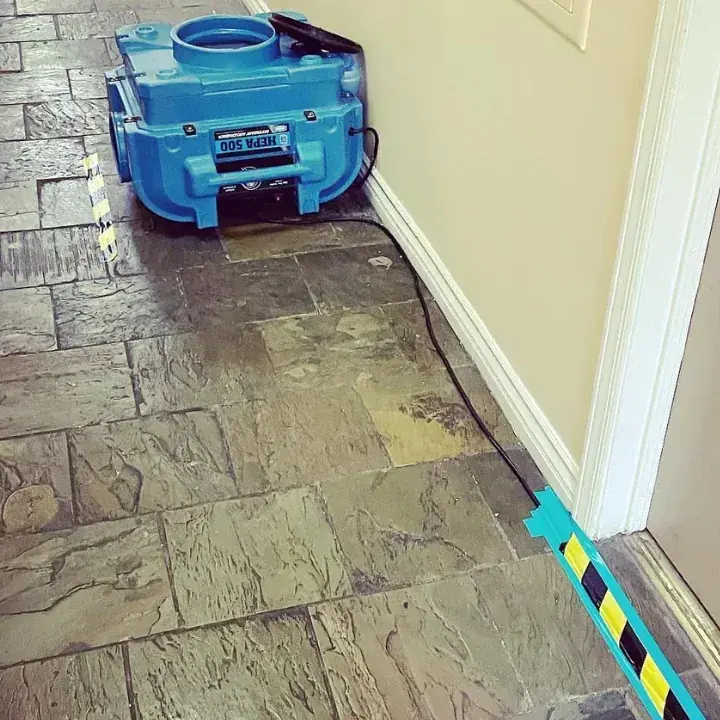
Cooling equipment near Las Tunas Drive, Temple City Park, or Kauffman Avenue can be installed in different parts of a building, so a ceiling stain does not reveal the full arrangement. Equipment decisions follow the wet materials and accessible cavity conditions. An equipment professional confirms the condensate fault, while the restoration team maps escaped water. Structural drying service places that task within a complete moisture response.
Distinguish condensate repair from damaged-material work
A clogged drain, failed pan, disconnected fitting, or equipment issue must be confirmed at the unit. When operation can be stopped safely, limiting new condensate helps stabilize the area. Repair of the equipment is separate from extraction and drying below it. Notes identify the source condition without claiming that every local system is configured the same way.
- The equipment area is photographed before drainage or repair changes the condition.
- Standing water in an accessible pan or floor area is recovered under safe conditions.
- Wet wiring or components remain outside the mitigation crew's repair scope.
- The date and status of source correction are included with the restoration record.
- Operation resumes only after the responsible equipment professional addresses the fault.
Follow the path through ceiling and wall layers
Condensate may move through insulation, along framing, across wallboard, or down a partition before showing as a ring or soft patch. The inspection starts below the equipment and expands to neighboring bays, wall tops, cabinets, and flooring. A thermal pattern can help direct attention, but material readings are used to confirm where water remains.
- Ceiling readings extend beyond discoloration to locate the actual wet edge.
- Insulation is assessed for saturation and contact with framing.
- Wall bases are checked when water may have traveled vertically inside a partition.
- Cabinet tops and backs receive separate attention below mechanical closets.
- Floors and contents are documented where drips reached the occupied room.
Create safe access before drying the cavity
A sagging ceiling or trapped water is controlled before equipment starts. Unsound wallboard and saturated insulation may need selective removal, while stable material can sometimes remain when exposure is clean and readings improve. After debris and hazards are addressed, air movement reaches exposed surfaces and dehumidification manages vapor released into the room.
- The area below an overhead wet section stays clear during access work.
- Openings are tied to readings, safety, and airflow needs.
- Loose material is contained before air movers operate.
- Daily trends determine whether equipment should move or access should change.
- Ceiling leak cleanup provides additional detail for an unstable overhead finish.
Use local records without inventing maintenance claims
Temple City Building and Safety examines mechanical, electrical, plumbing, structural, and grading plans, issues permits, and conducts construction inspections. An owner can bring the proposed equipment or building repair scope to that office. Around Temple Station, Roseglen Street, or Easton Wash, the drying file records unit location, wet materials, access openings, and final measurements for each retained assembly.
- The source note names the confirmed equipment problem and correction status.
- Room and bay labels remain consistent across photographs and meter logs.
- Removed insulation or wallboard is listed by location.
- Humidity and material trends support equipment adjustments.
- Mitigation completion is separated from equipment repair and finish reconstruction.
A final walkthrough also checks the area after equipment operation changes. Fresh staining, renewed dripping, or a rising reading may show that source correction is incomplete. Stable conditions across the equipment area and the rooms below support the handoff to finish repair.