Sudden supply pipe water response

Burst Pipe Cleanup in Temple City, CA

A broken pipe can fill cavities and cross rooms before the shutoff is reached. Cleanup follows the water path after the plumbing flow stops.

(888) 578-6508Define the cleanup boundary
IICRC S500 drying standardTruck-mounted extraction24/7 dispatch
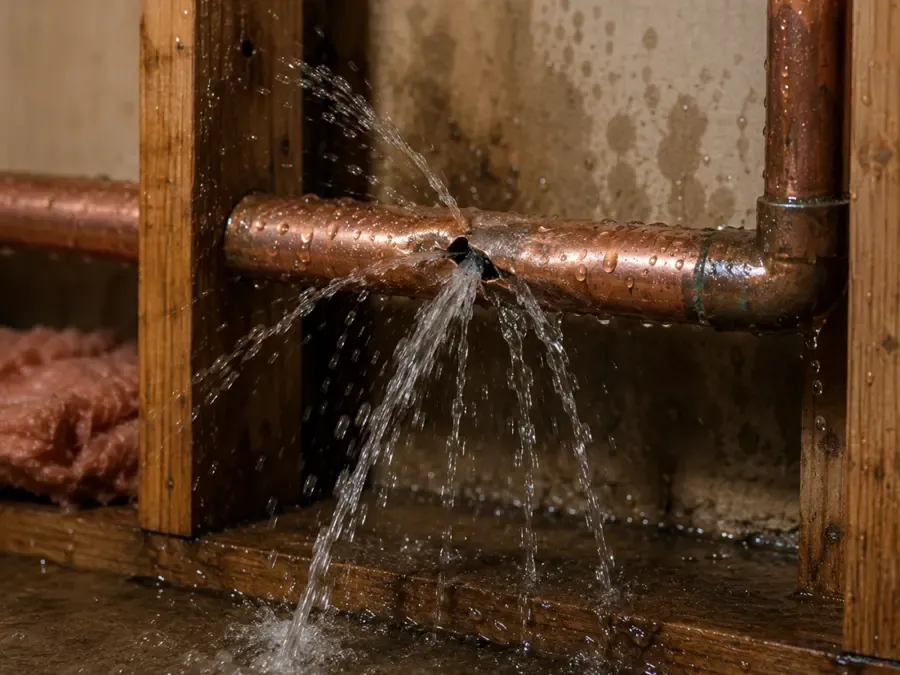
Water spraying from a split copper pipe inside a wall
Stop flow, then follow every wet assembly
Prioritysafe source control
First cleanupbulk water extraction
Common blind spotinsulated wall cavities
Completionroom and material records
Right now

First steps for burst pipe cleanup in Temple City

  1. 1

    Stop new flow safely

    Use an accessible shutoff without crossing standing water or electrical exposure, then have the failed pipe evaluated and repaired.

  2. 2

    Remove collected water

    Recover pools and saturated surface water before relying on air movement, working from controlled access routes into wetter areas.

  3. 3

    Open the migration path

    Inspect both wall faces, insulation, flooring, cabinets, and lower spaces, making selective openings only where readings support access.

  4. 4

    Finish with evidence

    Record material and room conditions until retained assemblies match appropriate dry references and the remaining repair scope is clear.

How the work is done

The standard behind burst pipe cleanup

  • Source repair and water mitigation are separate scopes
  • Pressurized water can reach rooms beyond the break
  • Cavity insulation can retain moisture after surfaces clear
  • Final readings support repair planning
Get the drying started today
Typical cost ranges

What does burst pipe cleanup cost in Temple City, CA?

Burst pipe cleanup cost reflects the amount of released water, affected rooms, cavity insulation, floor layers, access, and time before source control. A focused break differs from a pressurized release that crosses levels or reaches several enclosed assemblies.

Contained area

$1,500 to $3,000
  • Prompt source control
  • Focused water recovery
  • Limited cavity access

Several rooms

$3,000 to $6,500
  • Wall and floor migration
  • Multiple drying zones
  • Daily material tracking

Complex loss

$6,500 to $12,000+
  • Cross-level water travel
  • Extensive insulation handling
  • Broad repair coordination

Typical ranges, not a quote. Room details can be entered in the water damage cost calculator.

Slip by slip

How burst pipe cleanup is handled in Temple City

  1. Slip 01

    Walkthrough and moisture map

    The tech who does the walkthrough finds the source and maps wet materials with thermal imaging and pinless meters before any burst pipe cleanup equipment goes down.

  2. Slip 02

    Extraction

    The extraction crew pulls standing water with truck-mounted extraction, so it leaves the building instead of wicking into the next room.

  3. Slip 03

    Structural drying

    Air movers set to each room's evaporation load and LGR dehumidifiers pull moisture out of framing, drywall and the slab surface.

  4. Slip 04

    Verify and document

    Readings are logged daily. Equipment comes out when wet materials sit within 2 to 4 points of a dry reference, and the logs go in the claim file.

A supply pipe failure can wet a Las Tunas Drive shop, a residence near Temple City Park, or rooms around the Roseglen Street area without following a neat boundary. Once the valve or building shutoff is safely controlled, cleanup begins at the lowest water collection point and works back toward the break. The Water extraction service outlines how removal, drying, and documentation fit together.

Make the release safe before chasing the puddle

Water near electrical equipment, a bowed ceiling, or a slippery stair changes the entry plan. Occupants should not cross the wet area merely to reach a valve. When the shutoff is accessible, stopping new flow limits migration while a plumber addresses the damaged pipe. Photographs of the break area and water edge preserve the initial condition before safe movement begins.

  • Electrical risk is assessed before pumps, vacuums, or cords enter the area.
  • Contents are moved along a clean route only after their starting condition is recorded.
  • Water is not released from a sagging ceiling without controlled access below.
  • The crew notes whether the break occurred inside a wall, cabinet, ceiling, or exposed run.
  • Plumbing repair details remain distinct from mitigation notes and drying decisions.

Track pressurized water through connected cavities

A strong spray can strike framing, insulation, sheathing, and the back of wallboard before appearing at the floor. Gravity then carries it to base plates, cabinets, floor seams, and rooms below. The inspection uses readings on both sides of the partition and follows the direction of travel. A small opening may answer more than removing a broad finished surface without evidence.

  • Wall bases are checked beyond the visible splash zone.
  • Insulation is evaluated because it can hold water against concealed materials.
  • Floor transitions and thresholds receive separate readings.
  • Cabinet toe kicks can conceal water that moved behind a finished face.
  • The level below is inspected even when the ceiling has not yet stained.

Recover water before building the equipment layout

Standing water and saturated carpet are mechanically extracted wherever access allows. The drying crew then places air movement and dehumidification for the material that remains. Open cavities and durable surfaces may dry in place when contamination is absent and readings improve. Swollen, crumbling, detached, or inaccessible material may require controlled removal to reach the assembly behind it.

  • Extraction passes continue until tools stop recovering meaningful liquid.
  • Air is aimed across exposed surfaces rather than into loose debris.
  • Humidity control prevents released vapor from collecting in other rooms.
  • Daily readings determine whether equipment needs to move or an opening must expand.
  • Ceiling leak cleanup addresses overhead water when the pipe break occurred above occupied space.

Create a repair-ready record

Temple City Building and Safety examines plumbing, electrical, structural, and mechanical plans and conducts construction inspections. The property owner can present the proposed repair scope for guidance. Near Kauffman Avenue, Temple Station, or Easton Wash, a useful mitigation file lists affected rooms, access openings, removed materials, and final readings so reconstruction can start with a clear boundary.

  • Source-control notes identify when new water stopped.
  • Photographs use consistent room and wall labels throughout the job.
  • Removed materials are listed separately from items awaiting a repair decision.
  • Equipment changes are connected to trends in the same marked locations.
  • The final report discloses inaccessible areas and confirms recorded dry comparisons.

A post-repair check confirms that no fresh water has entered the mapped area.

Coverage

Burst Pipe Cleanup across Temple City

Water damage restoration in Temple City covers ZIPs 91780. Local areas include Las Tunas Drive, Kauffman Avenue, Temple City Park, Temple Station, Easton Wash.

See every area and ZIP covered
Answers

Burst Pipe Cleanup questions in Temple City

Who should repair the broken pipe?

A plumber handles diagnosis and pipe repair. The mitigation team addresses water that escaped into rooms and materials. Keeping those scopes separate makes the record clearer and prevents a repaired fitting from being mistaken for a completed structural dry-out.

Why inspect the wall after the pipe stops leaking?

Wallboard may look better while insulation, framing, and the base plate remain damp. Water can also run inside the cavity and emerge away from the break. Readings on both wall faces and at the floor help establish whether controlled access is needed.

Can wet insulation dry inside a closed cavity?

Some assemblies may dry with limited access when the water is clean and readings show progress. Saturated insulation can slow airflow and hold water against framing. Its condition, material type, contamination, and ability to drain determine whether it can remain.

What should occupants do before cleanup begins?

People should avoid wet electrical areas, sagging ceilings, and slippery floors. The source may be shut off only when the valve is safely accessible. Photographs and a list of affected rooms are useful, but no one should enter an unsafe area to collect them.

Does a pipe break always require wall removal?

No. Removal should answer a specific access, contamination, or material-condition need. Meter readings, cavity configuration, insulation, and drying progress direct the decision. Broad demolition without evidence can remove recoverable finishes and obscure the original water path.

When is the structure ready for repair?

Repair planning can begin while drying is underway, but finishes should not close over retained moisture. The closeout should include source status, mapped rooms, material readings, openings, removals, and any inaccessible location that could not be confirmed.

Emergency water removal

Burst Pipe Cleanup in Temple City? Start the dry-out now.

A safe shutoff stops new water. The drying team maps affected materials and begins extraction while occupants stay clear of wet outlets.

Call (888) 578-650824/7