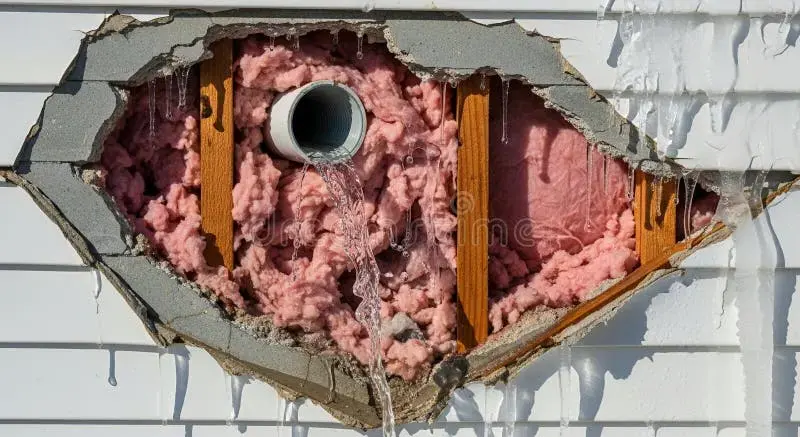
Cold exposed plumbing water cleanup

Frozen Pipe Cleanup in Temple City, CA

Cold damage is not assumed from the season or city. When a pipe splits after exposure, the response focuses on source control and the resulting indoor water path.

(888) 578-6508Map the thaw-water damage
IICRC S500 drying standardTruck-mounted extraction24/7 dispatch
Exposed pipe inside an opened insulated exterior wall
Confirm the break before planning the dry-out
Weather claimconfirm conditions first
Plumbing taskcontrolled thaw and repair
Cleanup taskextract escaped water
Hidden concernwall and cabinet cavities
Right now

First steps for frozen pipe cleanup in Temple City

  1. 1

    Respond without forced heat

    Avoid flames and uncontrolled heating around frozen plumbing, wet surfaces, or concealed building cavities while the condition is assessed.

  2. 2

    Coordinate source control

    Use a safely accessible shutoff and have a plumber evaluate thawing, confirm the split, and complete the pipe repair.

  3. 3

    Recover the released water

    Extract pools and inspect walls, insulation, cabinets, flooring, and lower spaces along the path from the confirmed break.

  4. 4

    Track the dry-out

    Record room conditions and repeated material readings until retained assemblies reach the drying goals established from sound, unaffected comparison materials.

How the work is done

The standard behind frozen pipe cleanup

  • Local cold exposure varies and should not be overstated
  • A split may release water as the pipe thaws
  • Plumbing repair precedes reliable drying progress
  • The wet boundary follows materials, not outdoor temperature
Get the drying started today
Typical cost ranges

What does frozen pipe cleanup cost in Temple City, CA?

Frozen pipe cleanup cost is driven by the water release, not the outdoor condition alone. Affected rooms, insulation, concealed cavities, floor layers, access, and the time between thawing and source control determine the restoration effort.

Contained area

$1,400 to $3,000
  • Single confirmed break
  • Direct extraction access
  • Limited cavity drying

Several rooms

$3,000 to $6,500
  • Water along wall runs
  • Cabinet and floor checks
  • Multiple equipment zones

Complex loss

$6,500 to $12,000+
  • Cross-level migration
  • Saturated insulation removal
  • Extended repair coordination

Typical ranges, not a quote. Room details can be entered in the water damage cost calculator.

Slip by slip

How frozen pipe cleanup is handled in Temple City

  1. Slip 01

    Walkthrough and moisture map

    The tech who does the walkthrough finds the source and maps wet materials with thermal imaging and pinless meters before any frozen pipe cleanup equipment goes down.

  2. Slip 02

    Extraction

    The extraction crew pulls standing water with truck-mounted extraction, so it leaves the building instead of wicking into the next room.

  3. Slip 03

    Structural drying

    Air movers set to each room's evaporation load and LGR dehumidifiers pull moisture out of framing, drywall and the slab surface.

  4. Slip 04

    Verify and document

    Readings are logged daily. Equipment comes out when wet materials sit within 2 to 4 points of a dry reference, and the logs go in the claim file.

Temple City sits in the western San Gabriel Valley at the base of the San Gabriel Mountains. When a cold-damaged pipe releases water near Las Tunas Drive, Temple City Park, or Kauffman Avenue, a plumbing inspection identifies the break. Water extraction follows safe shutoff, room-by-room moisture checks, and a record of the affected materials, including damp insulation around the failed connection and any wall or ceiling below it.

Handle a suspected freeze without creating a second hazard

A pipe that has not yet split can release water when thawing exposes a crack. Occupants should avoid open flame, uncontrolled high heat, and electrical devices near wet materials. An accessible shutoff can limit flow, while a plumber evaluates the frozen section and restores the system safely. The mitigation team prepares for water recovery instead of making assumptions about the pipe material or location.

  • Exterior spigots, exposed runs, cabinets, and unconditioned spaces are inspected only where accessible.
  • Photographs record ice, staining, or visible splits before the condition changes.
  • Wet electrical components remain isolated pending appropriate assessment.
  • A slow thaw is not treated as proof that the pipe stayed intact.
  • Repair notes identify the confirmed break while cleanup notes describe affected materials.

Follow water released during thawing

The first wet spot may appear below or beside the failed section rather than at the crack itself. Water can move along a pipe opening, wall framing, insulation, and floor edges before reaching an occupied room. Technicians compare both sides of walls, cabinets, flooring, and spaces below. Meter readings define the boundary after surface water is recovered.

  • Insulation is checked for retained water that blocks cavity airflow.
  • Cabinet backs and toe kicks receive separate readings when plumbing passes nearby.
  • Floor transitions are mapped because water may move beneath a finished edge.
  • Ceilings below the break are assessed for softness and trapped water.
  • The dry reference comes from comparable unaffected material in the building.

Dry the release rather than the weather story

After the plumbing source is controlled, extraction removes recoverable liquid. Air movement and dehumidification then address the material load that remains. The equipment plan is based on room volume, exposed wet surfaces, and evaporation response. It does not expand merely because cold weather caused the break. Selective openings are made where they provide needed access to a damp cavity.

  • Standing water receives mechanical recovery before extended evaporation.
  • Airflow is kept away from loose contaminated debris.
  • Room conditions and material readings are recorded at consistent locations.
  • Equipment moves when one wall or floor section lags behind nearby materials.
  • Burst pipe cleanup provides the broader response for a sudden pressurized release.

Inspect exposed plumbing before cold weather

Pipe material, building age, and foundation details need to be checked at the affected property before a prevention plan is prepared. Prevention therefore stays practical and property-specific. Accessible exterior plumbing may be protected, cabinet areas can be kept appropriately conditioned, and known vulnerable runs can be discussed with a plumber. Around Roseglen Street, Temple Station, or Easton Wash, the building inspection matters more than a neighborhood generalization.

  • Shutoff locations should remain visible and reachable without crossing stored items.
  • Damaged insulation around an exposed run should be evaluated before the next cold period.
  • Temporary heating devices must be used according to safe operating requirements.
  • Vacant spaces need a property-specific plan for water and temperature management.
  • Final cleanup records identify dried materials and any plumbing or finish repair still pending.
Coverage

Frozen Pipe Cleanup across Temple City

Water damage restoration in Temple City covers ZIPs 91780. Local areas include Las Tunas Drive, Kauffman Avenue, Temple City Park, Temple Station, Easton Wash.

See every area and ZIP covered
Answers

Frozen Pipe Cleanup questions in Temple City

Are frozen pipes common throughout the city?

An exposed pipe and a protected interior pipe can experience very different temperatures. Cold exposure varies by property and plumbing location. Inspection checks insulation, shutoff access, and nearby wet finishes rather than assuming every neighboring building has the same exposure. The actual pipe condition and indoor water path determine the work.

Should a frozen pipe be heated quickly?

Open flame and uncontrolled heat can damage plumbing or create a fire hazard. A plumber should direct safe thawing and repair. Because a hidden split can release water during thawing, the shutoff should be accessible and the surrounding rooms watched for new moisture.

Why can water appear far from the frozen section?

Water can travel along framing, through insulation, around pipe openings, and beneath flooring before it becomes visible. Gravity may carry it to a lower level. Readings on connected walls and finishes locate the wet boundary more reliably than the first stain.

Can a wall remain closed after the break?

It may remain when the water is clean, materials stay sound, access is adequate, and readings improve. Saturated insulation, persistent elevation, contamination, or a sealed cavity may require a controlled opening. The decision should be documented rather than automatic.

What should be recorded for an insurance report?

Useful records include the confirmed break location, source-control time, initial photographs, affected rooms, moisture readings, openings, removed materials, equipment changes, and final comparisons. Plumbing repair and water mitigation should appear as separate parts of the event.

How can another cold-related release be reduced?

A property-specific assessment can identify accessible exposed plumbing, damaged insulation, cabinet areas, and shutoff access. Pipe material and building construction should be inspected directly so recommendations address the plumbing and access conditions actually present.

Emergency water removal

Frozen Pipe Cleanup in Temple City? Start the dry-out now.

A safe shutoff stops new water. The drying team maps affected materials and begins extraction while occupants stay clear of wet outlets.

Call (888) 578-650824/7