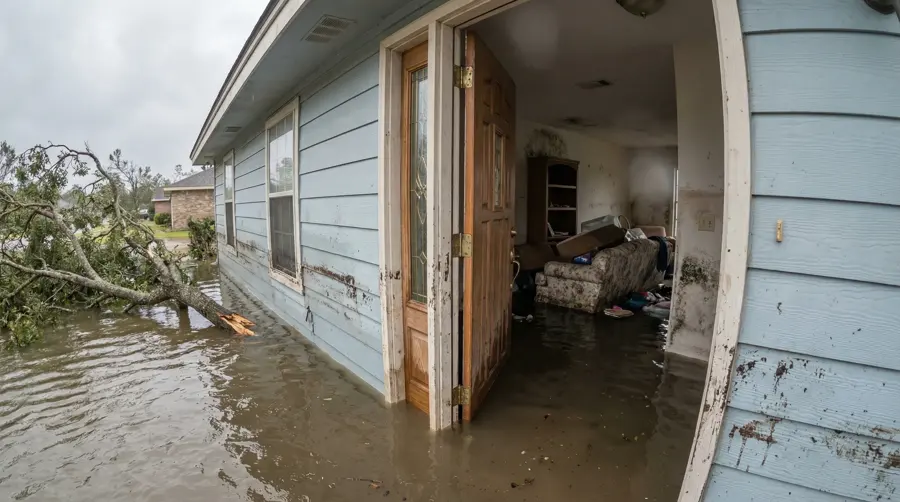
The October 2015 rainstorm flooded several Temple City streets. Near Roseglen Street, residents reported a garbage can blocking a storm drain; clearing it allowed water to move into Easton Wash. When runoff reaches a building, the cleanup team traces its entry, isolates contacted rooms, and selects extraction equipment for the water depth and surfaces.
Enter only after moving water and utilities are assessed
Storm water can conceal uneven flooring, sharp debris, open drains, and electrical hazards. Occupants should not wade through the building to retrieve items or operate equipment. The response team establishes a controlled entrance, photographs the exterior and interior water marks when safe, and separates wet traffic from clean rooms. Continued entry must be identified before pumping changes the visible level.
- Electrical service and powered equipment are treated cautiously around standing water.
- Sagging ceilings and weakened finishes remain outside the initial travel route.
- Boot and tool movement stays within the contaminated zone.
- Photographs record sediment, water edges, and openings where runoff entered.
- Active exterior entry is addressed before indoor drying progress is evaluated.
Remove liquid, sediment, and affected porous material in order
Pumps or extraction tools lower accessible water after the work area is safe. Sediment and loose debris are collected without spreading them through dry spaces. Carpet pad, insulation, wallboard, and other porous materials in contact with contaminated runoff receive a conservative assessment because surface cleaning may not reach the interior. Durable exposed surfaces can then be cleaned before structural drying.
- Bulk water is recovered from the deepest accessible point without disturbing unstable material.
- Solid debris is bagged or contained along a controlled route.
- Porous finishes are documented before removal decisions are carried out.
- Wall cavities are opened where contaminated water or sediment entered.
- Remaining hard surfaces are cleaned before air movement could distribute residue.
Trace the wet boundary beyond the dirt mark
A sediment mark shows where dirty water touched a visible face, but capillary movement can extend higher or farther inside wallboard, framing, cabinets, and floor layers. Meter readings define the structural drying boundary after contaminated material is removed. The equipment layout keeps the affected zone controlled while air movers expose cleaned surfaces to dehumidified air.
- Wall and cabinet readings extend beyond the visible water mark.
- Floor transitions are checked for water beneath neighboring finishes.
- Humidity is managed so released vapor does not collect elsewhere.
- Equipment is adjusted when material trends differ across the room.
- Structural drying after cleanup continues until retained material reaches the documented comparison goal.
Use the local event accurately in the property record
Los Angeles County Fire Department and Los Angeles County Public Works responded to the reported 2015 flooding. That does not assign responsibility for a private cleanup or establish a flood zone. Notes for properties near Las Tunas Drive, Temple City Park, or Temple Station should focus on the actual entry point, source condition, affected materials, and work performed rather than applying a citywide label.
- The file distinguishes outdoor runoff from a sanitary backup or interior supply release.
- Initial images show water marks before cleaning changes the scene.
- Removed materials are listed by room and assembly.
- Cleaning records precede equipment logs for the exposed structural area.
- Final notes identify dried materials and separate later reconstruction needs.
Exterior photographs are retained with the indoor map so later readers can see the reported entry side without assuming every low opening failed. That distinction keeps one storm observation from becoming a permanent property claim.