Commercial property water response

Commercial Water Damage in Corona, CA

A commercial water loss needs a moisture plan that protects people, equipment, and records while preserving safe access to unaffected operations where building conditions and electrical safety allow occupants to remain.

(888) 578-6508Plan commercial restoration
IICRC S500 drying standardTruck-mounted extraction24/7 dispatch
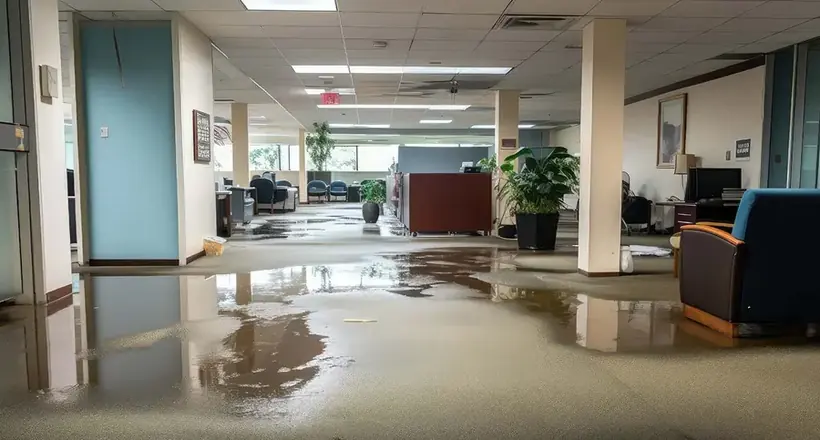
Standing water across an office floor
Zone the loss around hazards and operations
Plan structurezones and priorities
First protectionpeople, power, and records
Work strategystaged mitigation
Release methodzone-specific readings
Right now

First steps for commercial water damage in Corona

  1. 1

    Establish site command

    Name property and mitigation contacts, document source status, identify electrical and structural hazards, and protect occupants, records, and critical equipment. Record authority lines.

  2. 2

    Build operational zones

    Label affected departments, buffer areas, clean routes, materials, and lower levels, then set priorities around safe continuity requirements.

  3. 3

    Sequence mitigation work

    Extract water, isolate contamination, create measured access, clean retained surfaces, and place drying equipment without blocking required routes.

  4. 4

    Report and release by zone

    Provide consistent moisture trends, restrictions, equipment changes, and repair boundaries until each area meets its documented target.

How the work is done

The standard behind commercial water damage

  • A major medical employer is a major employer
  • A major school district employer is a major employer
  • Major manufacturing employers are major employers
  • Commercial uses require property-specific continuity planning
Get the drying started today
Typical cost ranges

What does commercial water damage cost in Corona, CA?

Typical local commercial water damage runs $3,500 to $15,000+. Building size, occupancy, water category, affected zones, specialized contents, access controls, and drying duration determine the final scope.

Focused business area

$3,500 to $6,500
  • One controlled zone
  • Accessible clean-water loss
  • Limited continuity measures

Multi-zone operation

$6,500 to $15,000
  • Several affected assemblies
  • Staged access and drying
  • Daily stakeholder reporting

Complex facility loss

$12,000 to $15,000+
  • Critical occupied functions
  • Contamination or broad migration
  • Extensive coordination and records

Typical ranges, not a quote. Room details can be entered in the water damage cost calculator.

Slip by slip

How commercial water damage is handled in Corona

  1. Slip 01

    Walkthrough and moisture map

    The tech who does the walkthrough finds the source and maps wet materials with thermal imaging and pinless meters before any commercial water damage equipment goes down.

  2. Slip 02

    Extraction

    The extraction crew pulls standing water with truck-mounted extraction, so it leaves the building instead of wicking into the next room.

  3. Slip 03

    Structural drying

    Air movers set to each room's evaporation load and LGR dehumidifiers pull moisture out of framing, drywall and the slab surface.

  4. Slip 04

    Verify and document

    Readings are logged daily. Equipment comes out when wet materials sit within 2 to 4 points of a dry reference, and the logs go in the claim file.

The city's commercial context includes Corona Regional Medical Center, Corona Norco Unified School District, Fender USA Corona, and Monster Energy. Those confirmed employers illustrate varied occupancy, not identical buildings or needs. A loss near Grand Boulevard or Downtown Corona requires a plan based on the actual use, hazards, and assemblies. Local restoration services connect source-specific cleanup with structural drying.

Set authority, safety, and priorities at the start

One property contact should coordinate access, operations, security, and decisions while the mitigation lead manages the wet-area plan. Water near electrical equipment, ceilings, stored materials, or public routes can change which zones remain accessible. The first briefing separates immediate life safety from contents protection and business continuity.

  • Emergency contacts and decision roles are written down.
  • Wet electrical rooms remain restricted pending evaluation.
  • Public and employee routes avoid active work zones.
  • Critical records and equipment are documented before safe movement.
  • Source repair status is reported to all relevant leads.

Divide the building by function and moisture condition

A broad label such as second floor does not give crews or stakeholders enough detail. The map separates affected, buffer, and unaffected spaces using room names and operational function. Moisture readings then identify which walls, floors, ceilings, cabinets, and stored components belong inside each drying zone.

  • Departments or suites receive consistent location names.
  • Shared walls are checked on both accessible sides.
  • Lower levels are inspected after an overhead release.
  • Inventory areas use protected documentation routes.
  • Dry comparisons come from like materials in controlled areas.

Sequence work around contamination and continuity

Clean supply water, storm entry, sewage, and equipment discharge require different material handling. Extraction occurs before drying where practical. Contaminated zones are isolated and cleaned before airflow could distribute particles. Other areas may continue operating only when property leadership and safety conditions support separation.

  • Work phases preserve required exits and authorized access.
  • Debris movement avoids public and clean production routes.
  • Porous material decisions follow category and condition.
  • Equipment cords and condensate are included in safety planning.
  • Commercial structural drying adjusts by zone and material.

Report progress in decisions, not equipment counts

Stakeholders need to know which zones are drying, stalled, restricted, or ready for repair. Daily reports connect readings to access changes, removal decisions, and equipment moves. Material trends show progress in each zone and help the team decide where airflow needs adjustment.

  • Zone summaries identify the slowest remaining material.
  • Photographs use the same room and department names.
  • Exceptions and inaccessible spaces stay visible in reports.
  • Equipment releases follow measured results by zone.
  • Final records distinguish mitigation from reconstruction.

Corona accepts electronic permit packages through eTRAKiT. A commercial repair team can submit questions about the planned work with drawings, photographs, and the proposed scope. The mitigation file helps by showing removed materials, final moisture conditions, and spaces awaiting repair, so reconstruction planning starts with a documented picture of the building.

Shift changes and vendor access can alter a commercial plan during the project. A concise handoff should identify restricted zones, active equipment, pending source work, and the contact authorized to approve access. Security-sensitive rooms or production areas may require an escort, yet that limitation still belongs in the moisture record. Recording it allows later inspections to resume from known boundaries instead of treating an unobserved space as unaffected. The same handoff also helps prevent equipment from being unplugged or moved without coordination.

The handoff remains available at the controlled entry point so every shift sees the same restrictions and current zone status.

Coverage

Commercial Water Damage across Corona

Water damage restoration in Corona covers ZIPs 92877, 92878, 92879. Local areas include Downtown Corona, Grand Boulevard, Temescal Valley, Santa Ana River.

See every area and ZIP covered
Answers

Commercial Water Damage questions in Corona

Can part of a business remain open?

Possibly, when hazards, contamination, access, exits, noise, and property decisions support clear separation. Occupancy should never be assumed safe from revenue needs alone.

Who should direct decisions?

A designated property contact should coordinate business priorities and access, while mitigation leadership manages water, contamination, equipment, and drying documentation.

How are critical records protected?

Their condition and location are documented before safe movement. Handling priorities reflect water category, material type, security, and the organization's procedures.

Why use drying zones?

Zones connect room function, affected materials, containment, equipment, and readings. They also allow completed areas to release without waiting for the slowest location.

Does equipment quantity show progress?

No. Repeated material readings show whether the floor, wall, or ceiling is drying. Daily temperature and humidity records help explain that progress and direct changes to equipment placement.

What belongs in daily commercial reports?

Reports should state zone status, hazards, access changes, readings, removals, cleaning work, equipment adjustments, decisions needed, and repair boundaries.

How should shift changes be handled?

A written handoff identifies restricted zones, active equipment, pending source work, access rules, and the authorized property contact for decisions. The receiving shift confirms the handoff before entering controlled areas, which reduces accidental equipment changes and preserves a consistent site chronology.

What if a secure room cannot be inspected?

The limitation stays visible in daily reports, and authorized follow-up access is coordinated. The room should not be classified as unaffected without evidence. Security requirements and the authorized contact are documented so later access can complete the map without weakening facility controls. Pending spaces remain listed until access is completed and readings are recorded.

Emergency water removal

Commercial Water Damage in Corona? Start the dry-out now.

A safe shutoff stops new water. The drying team maps affected materials and begins extraction while occupants stay clear of wet outlets.

Call (888) 578-650824/7