Cold-weather pipe release cleanup

Frozen Pipe Cleanup in Corona, CA

Frosty winter mornings occur locally even though city snowfall is rare, so exposed plumbing damage is treated as a specific cold event rather than a routine condition.

(888) 578-6508Address frozen pipe water
IICRC S500 drying standardTruck-mounted extraction24/7 dispatch
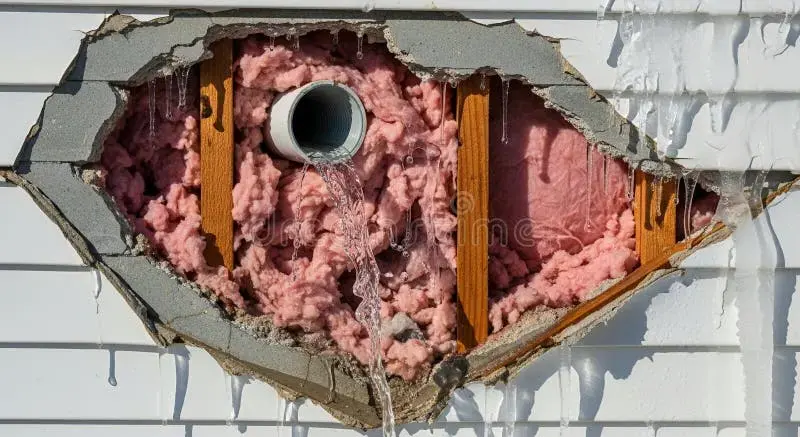
Exposed pipe inside an opened insulated exterior wall
Cold damage is limited, but the water path may not be
Local contextfrost, rarely city snow
Do not useopen-flame thawing
Likely checkexposed pipe runs
Mitigation focuswater released after thaw
Right now

First steps for frozen pipe cleanup in Corona

  1. 1

    Limit incoming water

    Shut off the affected supply when safely accessible and avoid thawing a suspected split while pressure can feed water into the building.

  2. 2

    Arrange safe pipe work

    Keep flame and improvised high heat away, and have a plumbing professional inspect, thaw, and repair the damaged component.

  3. 3

    Check the release path

    Measure exterior walls, cabinets, floors, ceilings, adjoining rooms, and lower levels for water that emerged during thaw.

  4. 4

    Dry verified materials

    Extract accessible liquid, expose blocked wet layers when justified, and monitor labeled locations against dry comparisons.

How the work is done

The standard behind frozen pipe cleanup

  • Winter frost is common locally
  • Snowfall inside city limits is rare
  • The Santa Ana Mountains may receive winter snow
  • Exposed plumbing deserves event-specific inspection
Get the drying started today
Typical cost ranges

What does frozen pipe cleanup cost in Corona, CA?

Typical local frozen pipe cleanup runs $1,400 to $5,500. The released volume, pipe location, affected levels, cavity access, material condition, and drying duration determine the actual restoration scope.

Small exposed release

$1,400 to $3,000
  • Accessible pipe area
  • Focused water recovery
  • Limited wall or cabinet checks

Concealed wall spread

$3,000 to $5,500
  • Several wet materials
  • Selective cavity access
  • Daily measurement record

Multiple-level damage

$5,500 to $12,000+
  • Vertical water migration
  • Broader controlled removal
  • Extended equipment plan

Typical ranges, not a quote. Room details can be entered in the water damage cost calculator.

Slip by slip

How frozen pipe cleanup is handled in Corona

  1. Slip 01

    Walkthrough and moisture map

    The tech who does the walkthrough finds the source and maps wet materials with thermal imaging and pinless meters before any frozen pipe cleanup equipment goes down.

  2. Slip 02

    Extraction

    The extraction crew pulls standing water with truck-mounted extraction, so it leaves the building instead of wicking into the next room.

  3. Slip 03

    Structural drying

    Air movers set to each room's evaporation load and LGR dehumidifiers pull moisture out of framing, drywall and the slab surface.

  4. Slip 04

    Verify and document

    Readings are logged daily. Equipment comes out when wet materials sit within 2 to 4 points of a dry reference, and the logs go in the claim file.

Winter frost is a confirmed Corona condition, but snow inside the city is rare. That distinction matters: frozen pipe cleanup should not portray the city as a snow climate. A cold-damaged hose connection or exposed run near western neighborhoods, the Santa Ana Mountains, Downtown Corona, or Grand Boulevard still can release substantial water when thawing begins. Local water damage help addresses the building after source control.

Recognize a limited cold-weather risk accurately

Chilly mornings can affect exposed plumbing, unconditioned enclosures, and outdoor connections. A lack of flow, visible frost, bulging section, or unexplained dampness can justify shutting off the supply and arranging plumbing evaluation. The team does not assume every low-flow fixture is frozen, and it does not describe mountain snowfall as a routine condition inside the city.

  • Outdoor hose connections receive a visual check for cracking.
  • Exposed pipes are inspected where cold air reaches an enclosure.
  • A closed cabinet can isolate plumbing from indoor warmth.
  • Water stains may appear only after the damaged section thaws.
  • Nearby dry materials provide comparison points for inspection.

Keep thawing away from fire and electrical hazards

Open flame, unattended high heat, and electrical devices near water create needless danger. A plumbing professional determines how to isolate and repair the affected section. Before flow returns, nearby contents should be moved when safe and the area below should be checked for a possible release path.

  • The building supply may need closure before thawing begins.
  • Occupants stay clear of wet outlets, cords, and panels.
  • Sagging ceilings below a pipe run are treated as unstable.
  • The starting condition is photographed before safe items move.
  • Repair and mitigation work remain separate in the record.

Trace water that appears during or after thaw

A split pipe can send water into an exterior wall, cabinet, ceiling, or floor assembly. Visible liquid is extracted first, then readings expand from the damaged run into adjacent materials. The moisture path matters more than the amount of ice seen at the source. Even a small split can feed a larger concealed area before shutoff.

  • Opposite wall faces are checked around the pipe location.
  • Cabinet bases can trap water below a supply connection.
  • Lower levels are inspected for vertical migration.
  • Insulation condition influences access and removal decisions.
  • Local extraction reduces liquid before drying equipment operates.

Dry the building, not merely the pipe surface

Once the source is repaired, the affected materials receive a drying plan based on exposure, cleanliness, and access. Airflow targets opened wet surfaces; dehumidification manages the moisture released into the room. The crew revisits labeled wall, floor, framing, and cabinet points until their readings meet appropriate comparison goals.

  • Equipment placement changes when one area stops improving.
  • Cold surfaces are not assumed wet without meter confirmation.
  • Removed materials are listed separately from dried assemblies.
  • Temperature and humidity records accompany material readings.
  • Final notes state the conditions supporting equipment removal.

The Santa Ana Mountains can receive winter snow while city limits rarely do. A restoration record should preserve that factual difference and describe only the observed property conditions. Frost exposure can explain why a particular pipe deserves investigation, but the damaged component and indoor water path still require direct confirmation.

Cold-weather prevention belongs after the observed loss is documented, not in place of it. Once repairs and drying are complete, the property contact can discuss exposed runs, cabinet airflow, hose connections, and future shutoff access with the appropriate trade. The mitigation file should remain focused on the actual split, the water it released, and the materials affected. Keeping prevention notes separate avoids turning one frosty morning into a claim about every pipe or property in the city.

Coverage

Frozen Pipe Cleanup across Corona

Water damage restoration in Corona covers ZIPs 92877, 92878, 92879. Local areas include Downtown Corona, Grand Boulevard, Temescal Valley, Santa Ana River.

See every area and ZIP covered
Answers

Frozen Pipe Cleanup questions in Corona

Are frozen pipes common throughout the city?

Winter frost is common in Corona. A suspected freeze-related break needs inspection of the exposed pipe, signs of ice, and the failed connection. Plumbing findings determine source repair while moisture checks locate the water already released indoors.

Does mountain snow mean snow is common in the city?

No. The nearby Santa Ana Mountains can receive winter snow, while snowfall within city limits is rare. Cleanup copy should preserve that distinction.

Can a frozen pipe leak before it thaws?

Damage may remain hidden until ice begins melting or pressure returns. Closing the supply before thawing can limit additional water if the pipe has split.

Should an open flame thaw a pipe?

No. Flame can ignite nearby materials and damage plumbing. A plumbing professional should choose a safe method and determine whether the pipe needs repair.

Why inspect rooms below the pipe?

Water can travel inside walls and through floor openings. A lower ceiling or cabinet may become wet before the source-room surface shows the full release.

What proves the cleanup is complete?

Labeled material readings, dry comparisons, photographs, and equipment notes show whether the affected wall, floor, cabinet, or framing reached the documented goal.

Can a closed cabinet affect pipe exposure?

A cabinet can reduce indoor air circulation around an exterior-wall pipe. The actual pipe condition still needs inspection before cold damage is stated. The inspection also notes whether stored contents or closed doors limited air movement around the plumbing enclosure during the cold period.

What should a cold-loss record avoid?

It should avoid claiming routine snow or a citywide pipe problem. The record should describe the observed frost exposure, damaged component, and measured water path. Prevention suggestions can be recorded after cleanup, but they should remain separate from facts about the observed release and affected materials.

Emergency water removal

Frozen Pipe Cleanup in Corona? Start the dry-out now.

A safe shutoff stops new water. The drying team maps affected materials and begins extraction while occupants stay clear of wet outlets.

Call (888) 578-650824/7