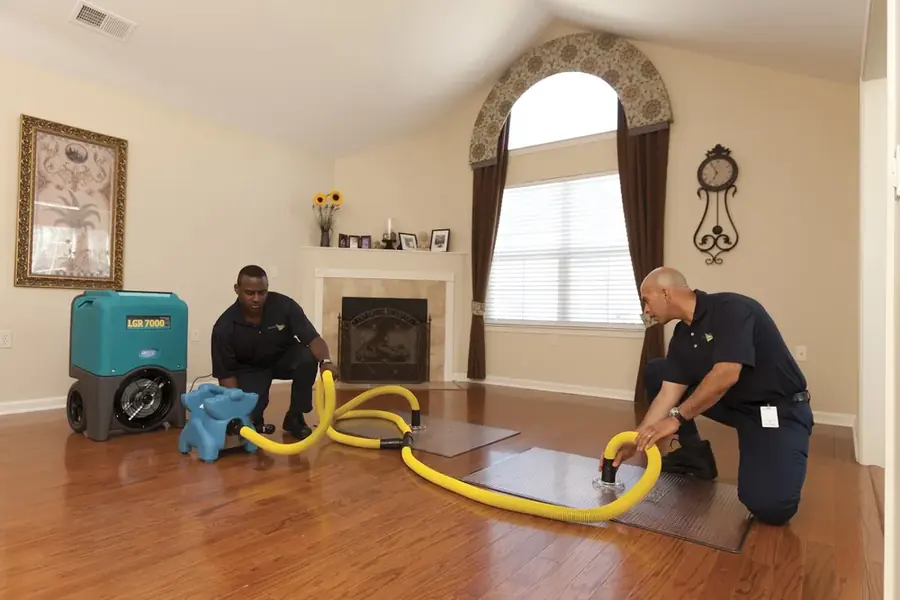
Water extraction in Corona starts with a question: where did the release travel after leaving its source? A puddle near Grand Boulevard may cross a flooring seam, enter a cabinet toe kick, or descend through an opening before it is noticed. The same investigation applies around Downtown Corona, the Temescal Valley area, and western neighborhoods. Local water damage restoration connects removal with the next drying phase.
Build the boundary before moving equipment
Source control prevents new water from hiding progress. The crew then records visible depth, water origin, affected rooms, and surfaces that appear dry but border the loss. A meter survey expands from the puddle toward dry comparison materials. This approach separates a limited spill from a larger assembly problem without guessing from stains alone.
- Doorways and flooring transitions are checked in both directions.
- Wall bases are measured where water could wick above the floor.
- Cabinet ends and toe kicks are inspected for trapped moisture.
- Rooms below are evaluated when water began on an upper level.
- Sewage and outdoor runoff receive contaminated-water controls.
Choose recovery methods for the surface
Hard flooring, carpet, pad, and open cavities do not release water the same way. Portable extraction tools can address a confined area, while deeper standing water may need pumping before detailed passes. Removing as much liquid as practical reduces the load placed on air movers and dehumidifiers. It also gives the next readings a clearer starting point.
- Loose contents move only after their condition is photographed.
- Carpet decisions reflect water category and physical condition.
- Floor edges are rechecked after the visible pool disappears.
- Debris is separated from recoverable building materials.
- Electrical exposure is evaluated before powered tools enter the area.
Look for water the wand cannot reach
Extraction at the surface does not empty closed wall cavities or layered floors. Swollen trim, cool spots, separated seams, and elevated readings can justify selective access. The goal is not broad removal. Each opening should expose a material that requires cleaning, recovery, inspection, or airflow.
- A small base opening can reveal wet insulation or wallboard backing.
- Floating floor systems may carry water past the first damp plank.
- Built-ins can shelter a narrow pocket at the wall junction.
- Concrete and wood require different reference readings.
- Local structural drying begins after useful extraction and access.
Turn the initial map into a drying record
The extraction report establishes source status, water category, affected rooms, and initial material conditions. Later measurements return to the same labeled points. Falling readings show response, while a flat trend can indicate blocked evaporation, missed migration, or equipment that needs repositioning.
- Photographs identify the room and direction of water movement.
- Equipment notes explain placement changes during the project.
- Dry references come from comparable unaffected materials.
- Removed items are distinguished from materials dried in place.
- Final documentation states the measurement used for release.
the local utility smart meter alerts may prompt a property owner to investigate unexpected use, but they do not map water inside a building. Indoor inspection must still connect the suspected source to every affected finish. That distinction keeps a utility signal from becoming an unsupported claim about a pipe or room.
Contents also affect the extraction sequence. A soaked box on a dry shelf, a rug bridging two rooms, and furniture standing in shallow water each need a location note before movement. Blocking and safe relocation can expose more floor for recovery, while photographs preserve the original condition. The report should distinguish water removed from the structure from moisture remaining in contents. That separation helps the drying crew calculate what belongs inside the controlled environment and prevents a relocated item from obscuring a wet floor section during later readings.