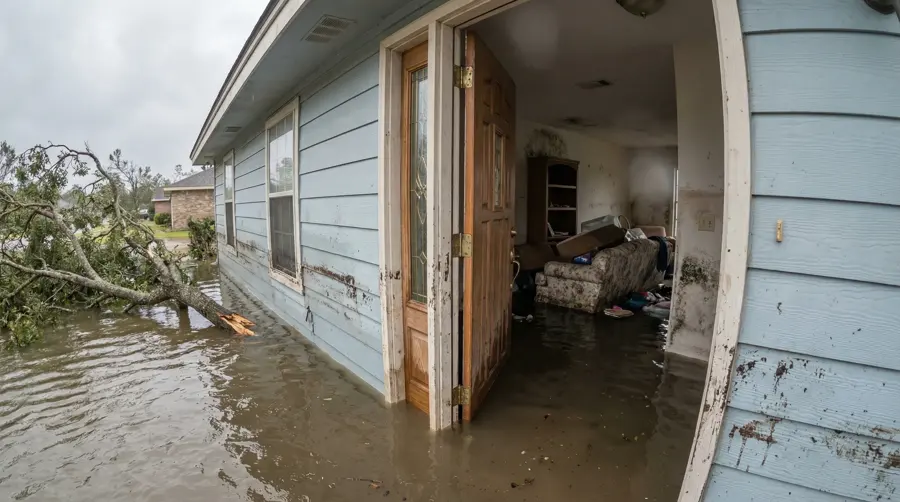
Corona has FEMA designated special flood hazard areas near the Santa Ana River corridor, but that fact never proves the status of one property. Storm water entering near Temescal Creek, Downtown Corona, Grand Boulevard, or the Temescal Valley area must be evaluated from the actual entry path and materials touched. Local water damage restoration keeps those conclusions tied to observed conditions.
Approach outdoor water as a contamination problem
Runoff can carry soil, roadway residue, organic debris, and other contaminants into a building. Occupants should avoid wading through it, especially near outlets, cords, appliances, or a service panel. The initial plan separates affected rooms from clean travel routes and identifies any ceiling, wall, or floor instability before extraction begins.
- Foot traffic is directed away from clean areas.
- Gloves and other protective controls match the exposure.
- Water levels and sediment lines are photographed first.
- Loose debris is handled separately from reusable contents.
- Electrical conditions are evaluated before powered equipment enters.
Document how water crossed the building opening
A doorway, low wall opening, garage threshold, or drainage backup can create a different interior pattern. The crew traces from that point through connected rooms and beneath finishes. Parcel-specific observations matter more than a broad flood map, which cannot establish the route or water depth inside a particular structure.
- Wall bases are checked beyond the visible sediment edge.
- Flooring seams can conceal lateral migration.
- Cabinet bases may trap dirty water and fine debris.
- Rooms on lower levels receive separate measurements.
- Exterior conditions are noted without assigning an unverified zone.
Remove unsalvageable porous materials deliberately
Wallboard, insulation, carpet, pad, and composite products can absorb contaminated water. Their cleanliness, physical condition, and access determine removal. Durable surfaces are cleared of gross debris and cleaned before drying. Controlled cuts use a measured boundary and keep debris from crossing into unaffected spaces.
- Extraction removes accessible liquid before detailed cleaning.
- Porous debris is bagged within the isolated work area.
- Framing receives cleaning after adjacent material removal.
- Hidden pockets are opened when readings support access.
- Local sewage cleanup covers sanitary waste contamination.
Dry only after the cleaning sequence is established
Air movement should not distribute contaminated dust or aerosols through occupied rooms. Once removal and cleaning prepare the work zone, dehumidification and directed airflow address retained moisture. Daily readings follow labeled framing, floor, and wall locations until the material response supports release.
- Containment condition is checked during each work period.
- Equipment stays within the planned contaminated zone.
- Material readings are paired with cleaning and removal notes.
- Dry comparisons come from unaffected materials of like type.
- Final photographs show the condition before reconstruction.
The project file should identify when water entered, the openings it crossed, and whether flow continued after rainfall stopped. It can accurately describe the Santa Ana River corridor, Temescal Creek, observed runoff, and the building's specific entry points while leaving unsupported event history and parcel designations out.
Contents exposed to runoff need the same zone discipline as building materials. Nonporous items may be candidates for a controlled cleaning process, while absorbent items can retain soil and contamination. Each decision should identify the item, original room, exposure, and disposition. Moving belongings without labels can carry debris into a clean space and weaken the loss record. A designated contents area gives the team a place to photograph, separate, and evaluate items without interfering with structural removal and drying.
That contents ledger remains linked to the room map throughout cleaning and structural drying.