Sanitary backup cleanup

Sewage Cleanup in Corona, CA

Sewage carries contamination that changes safe entry, porous material removal, detailed cleaning, and controlled drying procedures from the first containment boundary through cleaning and final documentation.

(888) 578-6508Begin sewage cleanup
IICRC S500 drying standardTruck-mounted extraction24/7 dispatch
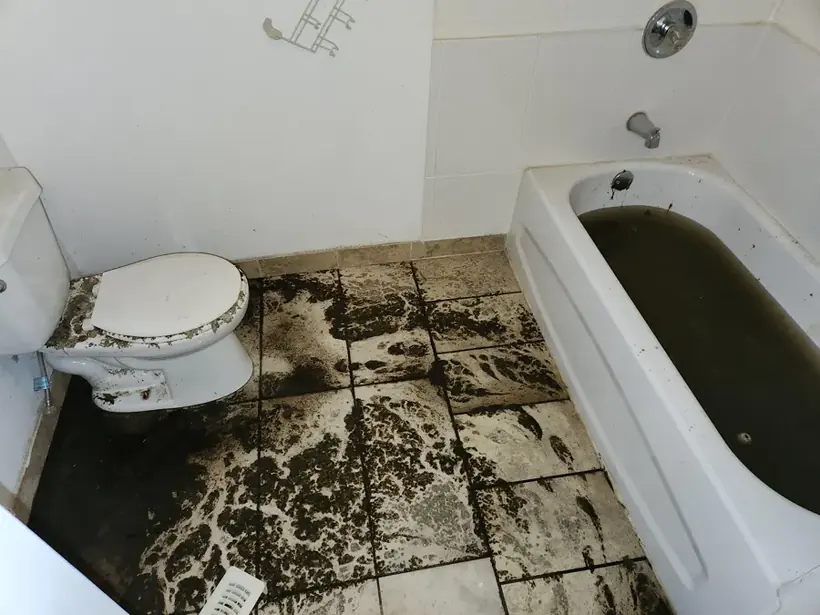
Contaminated residue around a toilet and bathtub
Contain first, remove contamination, then dry
Water categorygrossly contaminated
First boundarykeep people outside
Removal focuswaste and porous materials
Drying startafter cleaning controls
Right now

First steps for sewage and black water cleanup in Corona

  1. 1

    Isolate the affected area

    Keep occupants and pets away, establish clean and dirty boundaries, and identify electrical exposure before water or debris recovery.

  2. 2

    Stop recurring contamination

    Arrange plumbing or sewer source work, avoid using connected fixtures, and document the reported source without assuming private lateral ownership.

  3. 3

    Remove and clean

    Recover waste, discard affected porous materials as required, clean retained durable surfaces, and control tools, debris, and travel routes.

  4. 4

    Dry within containment

    Start airflow after cleaning conditions are ready, monitor retained materials, and preserve separate records for removal, cleaning, and drying.

How the work is done

The standard behind sewage and black water cleanup

  • The local utility provides water and sewer service
  • Private lateral ownership is not confirmed
  • Backup frequency is not confirmed
  • Contaminated water requires protective handling
Get the drying started today
Typical cost ranges

What does sewage and black water cleanup cost in Corona, CA?

Typical local sewage and black water cleanup runs $2,800 to $9,800. Contaminated area, material porosity, source control, containment, removal, cleaning, and drying needs determine the final scope.

Limited sanitary release

$2,800 to $4,800
  • Small isolated room
  • Focused porous removal
  • Detailed surface cleaning

Several affected spaces

$4,800 to $9,800
  • Expanded containment
  • Wall or flooring removal
  • Longer cleaning and drying

Broad contaminated loss

$9,800 to $12,000+
  • Multiple occupied zones
  • Extensive debris handling
  • Complex cleaning documentation

Typical ranges, not a quote. Room details can be entered in the water damage cost calculator.

Slip by slip

How sewage and black water cleanup is handled in Corona

  1. Slip 01

    Walkthrough and moisture map

    The tech who does the walkthrough finds the source and maps wet materials with thermal imaging and pinless meters before any sewage and black water cleanup equipment goes down.

  2. Slip 02

    Extraction

    The extraction crew pulls standing water with truck-mounted extraction, so it leaves the building instead of wicking into the next room.

  3. Slip 03

    Structural drying

    Air movers set to each room's evaporation load and LGR dehumidifiers pull moisture out of framing, drywall and the slab surface.

  4. Slip 04

    Verify and document

    Readings are logged daily. Equipment comes out when wet materials sit within 2 to 4 points of a dry reference, and the logs go in the claim file.

the local utility provides sewer service; private lateral ownership and responsibility need to be established for the affected property. Cleanup near Downtown Corona, Grand Boulevard, western neighborhoods, or the Temescal Valley area must therefore rely on the observed source and affected rooms. Local water extraction is adapted with contamination controls for sanitary waste.

Keep occupants and clean areas separate

People and pets should stay outside sewage-affected rooms. Wastewater can expose skin, contents, and building materials to harmful contaminants. The work plan establishes an entry route, protective equipment, containment, and a debris path that does not cross unaffected living or business spaces.

  • Foot traffic is blocked at the clean boundary.
  • Electrical hazards are evaluated before water recovery.
  • Visible waste and water levels are photographed.
  • Reusable contents stay apart from contaminated debris.
  • Hands and personal items are not washed in the affected room.

Correct the source without assigning lateral ownership

A plumbing or sewer professional determines why flow returned and which component needs service. The restoration team records that finding and checks whether fresh contamination has stopped. The file also identifies restricted fixtures and the time service was restored, giving occupants clear information about the source while the affected rooms remain isolated for cleanup.

  • Fixtures remain unused until source professionals permit operation.
  • Recurring flow pauses cleanup and triggers renewed source control.
  • The source area and affected boundary receive separate labels.
  • Repair work is distinguished from contamination cleanup.
  • No citywide backup frequency is claimed.

Remove absorbent materials that cannot be made sanitary

Carpet, pad, insulation, damaged wallboard, and composite products can hold sewage within pores and layers. Controlled removal follows the water line, measurements, and physical condition. Durable surfaces receive gross soil removal followed by the planned cleaning process before drying equipment is used.

  • Liquid and solids are recovered with appropriate controls.
  • Porous debris is bagged inside the isolated area.
  • Wall cavities are opened where contamination entered.
  • Framing is cleaned after adjacent porous removal.
  • Tools and routes are managed to avoid cross-contamination.

Dry a cleaned structure inside the containment plan

Air movement begins only when it will not spread contaminated particles. Dehumidification and directed airflow then address moisture retained in prepared framing, concrete, and other durable materials. The team repeats measurements at labeled points and records cleaning steps alongside the drying trend.

  • Containment condition is inspected during the project.
  • Equipment remains dedicated to the planned work zone.
  • Dry comparisons match the retained material.
  • Local structural drying verifies cleaned assemblies.
  • Final documentation separates removal, cleaning, and drying.

Properties serving schools, medical spaces, manufacturers, homes, or shops can require different access and continuity plans. The contamination principles remain the same. Occupants stay outside, affected porous materials are handled conservatively, durable surfaces are cleaned, and drying proceeds within a controlled area supported by measurements.

Cleaning records identify each retained surface, the work performed, and any cavity or fixed item that limits access. Removed absorbent materials receive their own notes and photographs. After cleaning, moisture readings track the remaining framing and floor layers. The final file brings these separate records together so the repair contractor can see which surfaces were cleaned, which materials were removed, and which retained assemblies reached the drying target.

The final walk-through also confirms that debris routes, temporary barriers, and dedicated tools have been cleared without crossing clean occupied areas. Photographs show the retained surfaces before repair materials conceal them.

Before reconstruction, the work-zone boundary is checked once more for overlooked porous debris, damp framing edges, and openings that still require cleaning documentation.

Coverage

Sewage and Black Water Cleanup across Corona

Water damage restoration in Corona covers ZIPs 92877, 92878, 92879. Local areas include Downtown Corona, Grand Boulevard, Temescal Valley, Santa Ana River.

See every area and ZIP covered
Answers

Sewage and Black Water Cleanup questions in Corona

Can occupants clean a sewage backup themselves?

Direct contact and cross-contamination create significant concerns. Occupants should avoid the area and arrange source control and professional cleanup appropriate to the exposure.

Can carpet remain after sewage water?

Absorbent carpet and pad exposed to sewage generally require removal because contamination can penetrate layers that are not reliably cleaned in place.

Who owns the private sewer lateral in Corona?

Private lateral responsibility depends on the property and the affected connection. The utility, property records, and plumber can clarify ownership before repairs are arranged.

When can air movers start?

After waste removal and cleaning controls make airflow appropriate. Starting too early can spread contaminated particles beyond the intended zone.

Are all wall materials removed?

Removal follows the contamination line, material porosity, condition, and access. Clean durable framing may remain after proper cleaning and drying.

What should sewage documentation show?

It should identify boundaries, source status, protective controls, removed materials, cleaning steps, equipment use, and final readings for retained assemblies.

Does a dry reading prove a surface is sanitary?

No. Moisture measurement and cleaning verification answer different questions. The record should show removal and cleaning steps before final drying results. The closeout keeps cleaning records beside moisture records so neither a dry surface nor a clean appearance is used as a substitute for the other. The two records stay linked by room and surface labels.

What happens when a cavity cannot be cleaned?

The access limitation is documented and additional opening may be required. A concealed contaminated area should not be enclosed without an appropriate resolution. The team records the obstruction, expands controlled access when justified, and verifies the newly reached surface before reconstruction. Photographs and location labels connect that work to the original contaminated boundary.

Emergency water removal

Sewage and Black Water Cleanup in Corona? Start the dry-out now.

A safe shutoff stops new water. The drying team maps affected materials and begins extraction while occupants stay clear of wet outlets.

Call (888) 578-650824/7